Thursday, 9 March 2017

The Unusual (but Important) Combination of Creative Fulfillment and SEO

The Unusual (but Important) Combination of Creative Fulfillment and SEO

This year on Copyblogger, each month has a theme — and in March, it’s search engine optimization.

That’s great news for some of you, and terrible news for others. If you’d rather eat a bug than think about SEO, you and I have much in common. On Monday, I wrote about some solid SEO advice that won’t have you contemplating a heaping bowlful of breakfast crickets.

I also gave you some simple, “you-can-totally-do-this” suggestions on Copyblogger FM. And on The Digital Entrepreneur, Sean Jackson and Jessica Frick talked with SEO wizard Eric Enge about how search optimization has matured over the years and why it’s still important.

On Tuesday, Beth Hayden gave us a little gentle, user-friendly advice on keyword research. Finding your keyword phrases shouldn’t be a robotic process — it’s really about learning more about your audience and how they think.

Everyone on the editorial team has decided that Stefanie Flaxman won the week, with a Loverboy headline reference on Wednesday, combined with the subhead “The eye-roll heard round the world.” Well-played, Stefanie. This is a great post, too, about why writing actually is a pretty cool and amazing thing to do with your life.

Today we also published a new pair of Content Challenge prompts! These are exercises we do together as a community to get better at what we do … and more productive so we can make more great things happen.

Keep those creative thoughts flowing, and don’t overdo it on the breakfast crickets …

Hey, and don’t forget — tomorrow is the last day to try out StudioPress Sites with a free introductory month. You can click this link to get started, but the free month deal will go away Friday (tomorrow) at 5:00 p.m. Pacific Time.

— Sonia Simone
Chief Content Officer, Rainmaker Digital

Catch up on this week’s content


some of us would rather eat a bug than try to figure out what headless crawling meansThe Wise Content Marketer’s Guide to Sensible SEO

by Sonia Simone


this is not a time to guess or assume you know your audience so well that you know what they’re thinking3 Simple and Effective Keyword Research Tips

by Beth Hayden


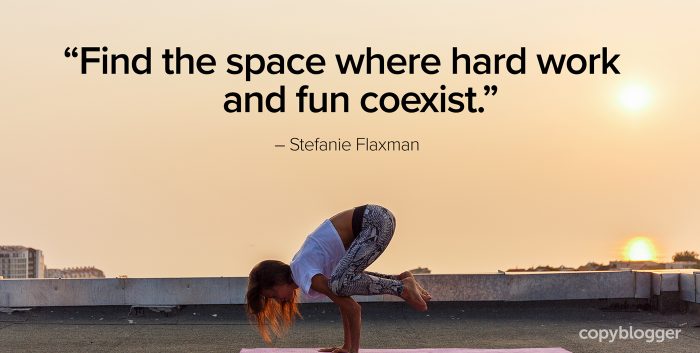
find the space where hard work and fun coexistEverybody’s Working for the Weekday

by Stefanie Flaxman


2017 Content Excellence Challenge: The March Prompts2017 Content Excellence Challenge: The March Prompts

by Sonia Simone


Does SEO Still Matter?Does SEO Still Matter?

by Sean Jackson & Jessica Frick


Brian Clark on the Productive Insights PodcastBrian Clark on the Productive Insights Podcast

by Caroline Early


10 Quality Factors Search Engines Need to See on Your Site10 Quality Factors Search Engines Need to See on Your Site

by Sonia Simone


Designing Your Lifestyle with EntrepreneurismDesigning Your Lifestyle with Entrepreneurism

by Brian Clark


How the Author of ‘The Antidote: Happiness for People Who Can’t Stand Positive Thinking’ Oliver Burkeman Writes: Part OneHow the Author of ‘The Antidote: Happiness for People Who Can’t Stand Positive Thinking’ Oliver Burkeman Writes: Part One

by Kelton Reid


9 Steps to Becoming a Better Podcast Listener (And Why That Matters)9 Steps to Becoming a Better Podcast Listener (And Why That Matters)

by Jerod Morris & Jon Nastor


The post The Unusual (but Important) Combination of Creative Fulfillment and SEO appeared first on Copyblogger.


from
http://feeds.copyblogger.com/~/279004222/0/copyblogger~The-Unusual-but-Important-Combination-of-Creative-Fulfillment-and-SEO/

2017 Content Excellence Challenge: The March Prompts

content excellence challenge - march prompts

Hey there, content geniuses — it’s March, and that means we have new prompts for our Content Excellence Challenge.

This is a yearlong community exercise in getting better at what we do … and more productive, so we can do more of it. (Or even accomplish something crazy like having a life.)

So, let’s do this.

The March Creativity Prompt

This month, we’re going to focus on actually doing our keyword research.

Not thinking about it. Not promising ourselves we’ll do it. Actually doing it.

Keyword research isn’t about making search engines happy — it’s about unlocking the language that your audience and customers use. Knowing the words they use will help you understand how they think and feel.

Check out Beth’s post from Tuesday for some simple ways to get started. Then you can move on to using keyword research tools, like Google Trends, AskThePublic.com, and the data from your own site analytics.

As you uncover words and phrases for your topic, think about how you’ll gracefully integrate them into your content.

Are the ideas you’re uncovering big enough for a blog series? A series of tutorial videos? Or maybe they’re important enough to become a new category on your site.

Keyword research actually produces a lot of creative ideas you can play with … but first you actually have to get the research done.

The March Productivity Prompt

I’m stealing this one (like I steal so many productivity ideas) from Cal Newport. It comes from his book Deep Work.

You know how Facebook is stealing your life? Or maybe for you, it’s Pinterest, or Instagram, or Twitter. Or it’s a game (ask me about my Pokedex) or some other fun activity.

Fun is wonderful. I recommend fun. But today’s fun activities are scientifically designed by fiends to steal every moment of your life.

To take them back, I loved Newport’s suggestion to schedule your goof-off time.

If you love Pinterest, don’t give up Pinterest. Schedule it. Decide on one or two good times of day to go look at photos of salads in mason jars. Decide how much time you want to spend with that. And put it in your calendar.

Even better, set up a recurring Freedom session, to set limits on the times you can actually access the site.

This can work nicely even if keeping up with social media is part of your work. It’s unhealthy and unproductive to try to keep your attention on a social site every second of the day. And yet … we try.

Instead, try scheduling those sessions. Then, when it’s time for you to have those political fights with your high school friends on Facebook, you’ll be able to really enjoy them.

Let us know what you’re doing!

If you get some solid keyword phrases uncovered this week, let us know in the comments! (You don’t have to let us know what they are, just an “I did it” works.)

And if you decide to take back your time and start scheduling your goof-off periods, let us know that as well.

The post 2017 Content Excellence Challenge: The March Prompts appeared first on Copyblogger.

Related Stories


from
http://feeds.copyblogger.com/~/278967768/0/copyblogger~Content-Excellence-Challenge-The-March-Prompts/

Wednesday, 8 March 2017

Everybody’s Working for the Weekday

"Find the space where hard work and fun coexist." – Stefanie Flaxman

Why do we spend so much time researching, creating, optimizing, and promoting our content?

“Geez, Stefanie. That’s a silly question,” you might be thinking. “You of all people should know that content marketing helps with our business goals. In fact, you wrote about that last week.”

And you’d be absolutely correct.

But that’s not what I want to focus on today. I want to look at the personal motivations and goals of people who decide to become writers and content marketers — people like you.

The eye-roll heard round the world

When I hear people glamorize writing as a profession, I buy a one-way airplane ticket to Eye-roll-Ville and fly high above the fantasy that writing is a special job.

Writing is hard work and always incomplete.

Why would someone think it’s exciting and “cool” to be a writer?

That’s the question that always brings me back down to Earth because the answer is … being a writer is actually that exciting and cool. I need to remember that.

The hard work part is still real, but the personal joy writing produces is incomparable. “Fulfilling” is an understatement.

Perhaps the most driven to communicate clearly, artists who are writers take on many different roles. They’re teachers, mentors, philosophers, trailblazers, revolutionaries.

They don’t just “do work,” they love the work they do.

Personal goals can fuel business goals

In the 1981 hit “Working for the Weekend” by Loverboy, the sentiment is that we have to get through the week. The weekend is what we look forward to, our reward.

Don’t get me wrong. I’m a big fan of the weekend. And it may seem a bit absurd to dissect the chorus of a lighthearted pop song, but the point I want to highlight is:

If we spend the majority of our time working during the week, shouldn’t we strive to make that time enjoyable as well?

I also support taking breaks during your workday and making it a priority to not get burned out, but those aspects aside, I’ve always been fascinated with the idea of loving the work you do so much that you’re not desperate for an escape.

Writers and content marketers tend to gravitate toward that intersection of personal and business goals.

They first get clear on the “why” that gets them out of bed in the morning and carries them to work each day, and then take steps so that some part of their daily reality (even if it’s not their full-time job) consists of progress that helps them achieve their desired lifestyle.

They find the space where hard work and fun coexist.

So, if you’d like to spend more of your time “working for the weekday,” let’s talk about getting clear on how you can start moving in that direction.

Answer these 3 questions to get clear on what you want

Before a content marketer writes her first word to promote a product or service, that product or service had to be born. Someone had to decide to build something that solves a problem.

In a notebook, write down these three categories across the top of a piece of paper:

  • What do I love to do?
  • What do people need related to those interests?
  • What solutions can I offer that will help establish me as an authority?

Jot down anything that comes to mind for each question.

Don’t hold back here because sometimes you won’t see a brilliant connection between all three categories that will become your content, product, or service concept until you release all of your ideas and get them written down.

I always go through this process with a pen and paper because it’s supposed to be messy. A digital document — that allows you to seamlessly delete some of your answers into oblivion — is too clean and organized for the madness that is necessary to have a breakthrough.

Self-indulgence as either self-care or self-harm

Is doing work you love self-indulgent and worthy of criticism?

Like anyone who chooses to pursue a career path that makes them happy should feel a little guilty … like what makes them so special that they can do work they find fun while other people are stuck at jobs that make them unhappy?

Consider this: self-harm is just as self-indulgent as self-care, but self-harm is often viewed as much more acceptable.

Staying at a job you dislike. Sleeping too little. Drinking too much alcohol. Eating an unhealthy diet. Normalizing all of those choices as just a part of modern life makes taking care of your well-being almost seem out of the ordinary.

Let’s say any self-indulgent action is either considered self-care or self-harm.

Self-care would be an action that helps support long-term happiness, while self-harm would be an action that satisfies a need and/or briefly produces joy, but does not support sustainable contentment.

When someone feels safer on the self-harm side of self-indulgence, clinging to the belief that happiness only occurs in fleeting moments and that the majority of existence is suffering … that’s a choice.

And if we’re willing to overlook those self-harm actions as understandable and necessary to navigate through life, then no one should be criticized for valuing self-care actions and taking the time to explore the interests they want to pursue professionally that would help them serve others.

Help people discover what you have to offer

Passionate writers want to reach everyone who will benefit from their work.

The thoughtful content on your website that you research, create, optimize, and promote is a reflection of your passion — and it attracts the people you aim to serve.

Do you love your work? If not, what can you do today to start moving toward a more fulfilling career? Commit to your next step in the comments below.

The post Everybody’s Working for the Weekday appeared first on Copyblogger.


from
http://feeds.copyblogger.com/~/278587994/0/copyblogger~Everybodys-Working-for-the-Weekday/

Tuesday, 7 March 2017

3 Simple and Effective Keyword Research Tips

"This is not a time to guess or assume you know your audience so well that you know what they’re thinking." – Beth Hayden

Keyword research is always a hot topic in content marketing circles.

It’s one of those subjects that never goes out of style — because wise content marketers know that using the right words in their content will give them a big edge over their competition.

Wondering how to find the “right” words to optimize your business’s content? Here are three quick tips for solid keyword research.

1. Discover the language your prospects use when they talk about your topic

My friend Shawn, whose company Clear Harmonies creates custom a cappella arrangements for vocal groups, learned an interesting marketing lesson after performing some focused keyword research and talking to his customers.

He thought that his prospects searched for the term “a cappella arrangements” when they looked for arrangement services online, but he discovered they actually searched for the term “a cappella sheet music” much more often.

Shawn’s story illustrates why it’s important that you discover the actual language your potential customers use when they search for information about your topic (or look for vendors who provide your services).

This is not a time to guess or assume you know your audience so well that you know what they’re thinking.

In addition to online keyword research tools, you can also:

  • Check out the comments you get from your community members and pay attention to the terms they use when they tell stories, ask questions, and offer opinions about your content.
  • Collect keyword data about the terms people were searching for right before they click on your site from most site statistics or analytics programs. It’s a gold mine for you as a content creator.
  • Conduct interviews or social media discussions to ask your prospects and customers about the terms they search for when they’re looking for information about your topic.

2. Study the content your prospects consume

Great copywriters thoroughly research their topics before they start writing projects.

Copywriters want to make sure they understand the language their prospects use before they craft their copy, because without that knowledge, they know their copy won’t convert.

You need to do the same thing with your keyword research. Read the articles your prospects read and study the language the authors use.

Find out which social media platforms your customers prefer and hang out on those sites. Watch for discussions where people ask questions or debate each other.

Popular videos, webinars, and podcasts in your niche are other resources. You can even review social media ads that target your ideal customer.

This technique will not only enhance your keyword research process, it will also ensure that you’ll never run out of content ideas!

3. Remember that language evolves over time

Search terms are always evolving and the way your customer speaks about your topic will change over time, too.

It’s smart to repeat your keyword research on a regular basis to make sure you stay current on the language people use.

To incorporate keyword research into your content marketing routine:

  • Add reminders to your calendar (quarterly, biannually, or annually) to prompt you to conduct additional keyword research.
  • Try a method you haven’t used before: experiment with a different keyword research tool, monitor conversations on social media, or conduct interviews.
  • Make time for keyword research after a task you already perform regularly, like checking your website traffic stats on a monthly basis.

The multiple (and often overlooked) benefits of keyword research

By discovering the language your customers already use, consuming the content that’s popular with your audience, and cultivating consistent research habits, you keep keyword research at the top of your business’s priority list.

Which is smart, because keyword research doesn’t only help you rank higher in search engines, it can also give you an endless supply of content topics and product ideas.

How has keyword research helped you optimize your content? What are your favorite tips? Share in the comments below.

The post 3 Simple and Effective Keyword Research Tips appeared first on Copyblogger.


from
http://feeds.copyblogger.com/~/278202336/0/copyblogger~Simple-and-Effective-Keyword-Research-Tips/

Monday, 6 March 2017

The Wise Content Marketer’s Guide to Sensible SEO

"Some of us would rather eat a bug than try to figure out what 'headless crawling' means." – Sonia Simone

Search engine optimization — SEO — is one of those “you love it or you hate it” topics.

Some get a charge out of the challenge of keeping up with those wily engineers at Google.

Others would rather eat a bug than try to figure out what “headless crawling” means and which redirect is the right one to pick in months that end in R.

I have to confess, I’m in the bug-eating camp on this one.

Fortunately, although technical SEO is still important for some sites, there’s a crazy-powerful optimization technique that people like me can get really good at.

Yes, it’s content. (You already knew that, because you’re smart.) Yes, it has to be good content. And yes, I’m going to talk about what, specifically, “good” means.

But first, I’m going to talk about my most important search optimization rule.

The great rule of SEO

My first and primary rule, when thinking about search engines, is never to do anything for the sake of SEO that screws up the experience for the audience.

That cuts out some downright dumb behavior, like overstuffing your content with keywords.

But it also helps you evaluate new advice that comes along. If it makes your site less useable, if it makes your message less effective, or if it alienates or confuses your audience … you should probably skip it.

Here are nine SEO recommendations that also work to make your site experience better for the human beings who read your content, listen to your podcasts, and actually pay for your products and services.

#1: Answer actual audience questions

Want lots and lots of people to visit your site, and stick around once they find you? Answer their pressing questions, and you’ll get your wish.

People fire up a search engine because they have unanswered questions. If you’re smart and knowledgeable about your topic, you can help with that.

Tutorial content is wonderful, but also think about questions like:

  • Why is [the thing] so hard to get started?
  • How competitive is [the thing]?
  • How can I get motivated to do more of [the thing]?
  • Is there a community of people who want to talk about [the thing]?
  • Where can I share my own stories about [the thing] and read other people’s?

#2: Use the language they use

Hand in hand with answering real audience questions is using your audience’s language.

That brings us to our friend keyword research. (Check out Beth’s post tomorrow for more on that.)

It’s too bad that some people still think keyword research means looking up a bunch of word salad that makes sense to rooms of computers in Silicon Valley.

Keyword research means figuring out the language that real human beings enter into search engines to find your stuff.

There are great tools out there for finding those turns of phrase. You can also add in some smart social media listening and pay attention to how people talk on the web about your topic. (This is also a good way to find more of those “problems people care about” I talked about in the last point.)

By the way, you don’t have to feel chained to a narrow set of word combinations that you found with your keyword research tool. Use the keyword phrases you find, absolutely, but don’t use them so much that it gets weird. You don’t have to do an in-depth study of latent semantic indexing — just use synonyms.

(Kind of like a real writer does. Golly.)

Use metaphors and analogies. Use a few big or unusual words (if they’re natural to your voice). Flesh out your list of keywords with all of the fascinating and creative things that writers and artists do.

#3: Cover topics comprehensively

Content and SEO experts love to write articles about precisely how long your content should be. Over the years, the recommendations have gone up, and then down, sideways, and any other direction you might think of.

My advice: your content should be as long as necessary to make your point.

Some ideas can be expressed quickly, with punchy, interesting little posts.

Some ideas need more time to develop fully. They deserve a longer format or a content series that gets published over time. You could even dedicate specific months to covering a subject in more depth, like we’re doing this year on Copyblogger. (Have you noticed? Three guesses what March’s topic theme is …)

A strong series can be repurposed into ebooks (or a whole ebook library, once you have a solid archive), podcasts, infographics, SlideShares, videos, and premium products like courses.

Stop falling for the myth of the “goldfish attention span.” Twenty-first-century audiences have plenty of attention for the things they care about, as long as you make the content easy to consume. Which brings us to …

#4: Create a user-friendly experience

It doesn’t matter how brilliant your content is — if it’s published in walls of tiny gray type, without subheads or line breaks, most users will skip it.

It’s actually really simple to take a strong piece of writing and make it much more accessible by formatting it well.

Make sure everything on your site is easy to read, watch, or listen to. Give everything a clear call to action, so people know what to do next. And establish clear paths to the outcomes your users want … using smart content marketing strategy to present useful options at every point along the way.

While we’re on the subject, if your site looks like it was published in 2003, you need a makeover. Immediately. Premium WordPress themes are a massive bargain for the design expertise (and clean back-end code) they give you in a turnkey package.

Also, users and search engines share a hatred of hacked websites. Use secure tools, including reputable themes and quality hosting, and a good monitoring service like Sucuri to make sure nothing funky is going on.

#5: Write about the whole picture

Covering your topic comprehensively matters, but it’s not just about going deep.

There’s also a real benefit to looking around and going wide with your content.

What’s the context for your topic? Who else is publishing about it? What are the trends? What’s changing? How is the larger environment shaping what’s going on? Who do you agree with? Who do you disagree with?

What do people need to know before they dive into your thing? Where do they start? Where do they go next?

If you write about social media marketing, write about people who have given up on it. Write about people who haven’t started yet. Write about how the larger culture and worldview are changing social media … and how social media is changing the world.

Every topic takes place in a larger context. If that context interests your audience, it should be part of your content mix.

#6: Cultivate your community of topic experts

Link-building is one of the most important topics in SEO.

Here’s a secret:

Link-building is community-building.

Even if your competitors aren’t into the whole “co-opetition” idea, there’s a larger community that cares about what you do.

My friend Jim is an orthopedic surgeon who creates YouTube content about surgical procedures. Other surgeons might (but probably won’t) link to him, because he’s a true competitor — you only get your knee operated on once. (We hope.)

But runners would link to him. Skiers would, too. And sites about staying athletic as you age.

Think about the community of web publishers who have the audience you want. Develop relationships with them. Support each other.

This isn’t, of course, about spamming people you don’t know and begging them for links. It’s about making yourself a valued participant in a larger ecosystem.

One terrific way to build amazing connections (and the links that go with them) is to publish guest content on excellent sites. Try it in a lazy, cheap way and it’s spam. Put the effort in to craft genuinely excellent material that serves their audience (and invites them to come check you out), and it’s a winning strategy.

#7: Keep things organized

Good technical SEOs know all about creating a logical site structure that’s easy for search engines to parse.

As I may have mentioned, I in no way resemble a good technical SEO. Instead, I rely on the Genesis framework and common-sense tags and categories to keep my site properly organized on the back end.

But it pays to keep yourself organized on the front end as well. That means making sure your navigation makes sense for what your site looks like today, not two years ago. It means you take your most valuable content and get it somewhere people can easily find it. And it means you link to your best content often, so your audience naturally continues to find and benefit from it.

#8: Quit being so damned boring

You can do everything “right” for SEO and still get no traction.

Why? Because no one links to you, no one visits your site, and no one recommends your content — it’s too similar to a thousand other sites. It’s boring.

If your niche is incredibly narrow and no one else can write about it, maybe you can get away with boring. Even then, it’s risky.

Be interesting.

#9: Don’t rely (solely) on SEO

And the final SEO tip?

Don’t try to make the search engines your only source of traffic.

Relying on one source of customers for your business is unacceptably risky.

Relying on a monolithic megacorporation as your one source of customers is insane.

Google doesn’t care about your business. Not even a tiny bit. Not even if you give them a lot of money every month for ads.

Make sure there are lots of different ways that potential customers can find you. Keep your eyes open for new opportunities. A platform that was a dud for you last year might offer a lot of promise today. And keep growing your email list, so if you do have a traffic hiccup, you still have a way to reach your most loyal audience.

So … let’s talk search engines

While search engine optimization shouldn’t be the only way you get traffic, it can be an important way for great people to find your site. So this month, we’ll be talking about smart ways to optimize your site for search … without messing up what you’re doing well.

Where are you on the SEO spectrum? Do you enjoy it, maybe even geek out about it, or are you in the eat-a-bug category? Let us know in the comments. :)

Image source: Jill Heyer via Unsplash.

The post The Wise Content Marketer’s Guide to Sensible SEO appeared first on Copyblogger.


from
http://feeds.copyblogger.com/~/277832258/0/copyblogger~The-Wise-Content-Marketers-Guide-to-Sensible-SEO/

Thursday, 2 March 2017

It’s Time to Pump You (and Your Content) Up

cb-weekly-red

So, Copyblogger has been running for about 11 years now. And in all that time, we’ve never written a post about Arnold Schwarzenegger, unless you count that one time I compared long-form sales pages to the Terminator.

Until this week. Entirely independently, Brian Clark and I both used the Governator to illustrate two different points about smart content creation.

On Monday, Brian broke down persuasive analogies — citing a particularly effective analogy Schwarzenegger used to make an environmental point.

On Tuesday, Stefanie brought a little relief by making some excellent points about why you lose business to your competitors … and how you can start to crush them. Like grapes.

And on Wednesday, I explained Jonah Sachs’s idea of “freaks, cheats, and familiars,” using good old Arnold as an example to demonstrate all three.

On Unemployable, Brian talked with Robert Bruce about the difference between good marketing automation and the kind that has skinny little arms like a baby-man.

And on Copyblogger FM, I talked about the power of picking the right frame for your content marketing. Kind of like the way the squat rack at the gym provides the perfect frame to do bicep curls in.

Hear me now and believe me later … catch you next week!

(P.S. If today’s Copyblogger Weekly seems more random than usual … you may need a little Hans and Franz to make sense of things.)

— Sonia Simone
Chief Content Officer, Rainmaker Digital

Catch up on this week’s content


the right analogy, at the right time, told the right way, may be exactly what they need to do business with youThe Persuasive Power of Analogy

by Brian Clark


no one cares about how good you are until they know they can trust youWhy a Prospect You Want Chooses Your Competitor

by Stefanie Flaxman


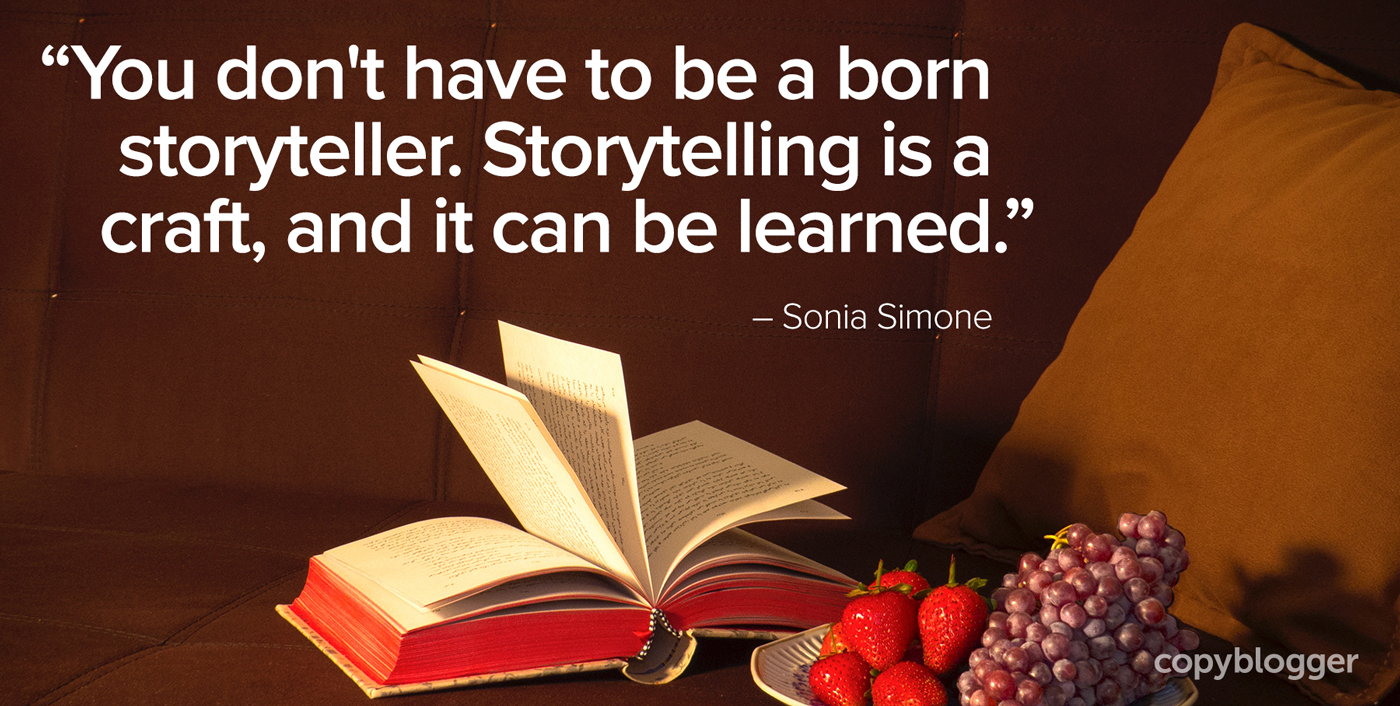
You don’t have to be a born storyteller. Storytelling is a craft, and it can be learned.How to Craft Timelessly Powerful Stories with Freaks, Cheats, and Familiars

by Sonia Simone


Is WordPress the Right Solution for Building Your Online Business?Is WordPress the Right Solution for Building Your Online Business?

by Sean Jackson & Jessica Frick


Are Automated Marketing Funnels a Fail?Are Automated Marketing Funnels a Fail?

by Brian Clark


Choose the Right Frame to Boost the Power of Your ContentChoose the Right Frame to Boost the Power of Your Content

by Sonia Simone


The Two Keys to Successful DelegationThe Two Keys to Successful Delegation

by Brian Clark


How Journalist and Author of ‘The Power of Meaning’ Emily Esfahani Smith Writes: Part TwoHow Journalist and Author of ‘The Power of Meaning’ Emily Esfahani Smith Writes: Part Two

by Kelton Reid


Are You Spending Enough Time Thinking?Are You Spending Enough Time Thinking?

by Jerod Morris & Jon Nastor


The post It’s Time to Pump You (and Your Content) Up appeared first on Copyblogger.


from
http://feeds.copyblogger.com/~/276584584/0/copyblogger~Its-Time-to-Pump-You-and-Your-Content-Up/

Wednesday, 1 March 2017

How to Craft Timelessly Powerful Stories with Freaks, Cheats, and Familiars

"You don't have to be a born storyteller. Storytelling is a craft, and it can be learned." – Sonia Simone

A few weeks ago, I recorded a podcast episode about Jonah Sachs’s book Winning the Story Wars. He had a particularly useful observation about three story elements that pull in audience attention. He calls them Freaks, Cheats, and Familiars.

Sachs explains how these elements can be deployed, like the Hero’s Journey, to make stories much more memorable and engaging.

As I was reading Story Wars, it struck me that there’s a well-known figure who illustrates all three of these elements in one person: legendary bodybuilder, action star, two-term California Governor, and crafter of potent analogies, Arnold Schwarzenegger.

Here’s how it works:

Freaks

Remember when we talked about not being so damned boring?

Sameness is boring. Conformity is boring. You break the brutal cycle of boring by being different.

Sachs’s freaks are story characters who compel our attention because they are different. They might be particularly tall or short, particularly handsome or ugly, or physically distinctive in some other way.

They also might be quite normal-looking people who stand out because they’re in a particular context. Normally we wouldn’t call Justin Trudeau a freak, but he’s almost bizarrely good-looking for a head of state. I’m a quite ordinary-looking person, but my pink hair stands out, particularly in a business context — and it becomes a freak element that people remember.

Schwarzenegger, of course, achieved freak status with his remarkable physique. To this day, he’s one of the most influential figures in bodybuilding history, with five Mr. Universe and seven Mr. Olympia wins.

But there are lots of bodybuilders. I’d argue that it’s Schwarzenegger’s strong Austrian accent that helps make him instantly memorable. That combination — the massive physique with the specific accent — creates a kind of “sketch” of him in our minds, even if we haven’t seen him often.

Freaks make great characters because they have good hooks to make them stick in our minds. A voice, a walk, a scar, a costume. Note that “freak” in this case isn’t pejorative and doesn’t imply that there’s something wrong with the person’s appearance.

One way to determine if you have a freak: if you saw them drawn in a graphic novel, with minimal context, would you recognize them?

Other memorable freaks, from both stories and real life, include:

  • Darth Vader
  • Dennis Rodman
  • The Joker
  • Charlie Chaplin
  • Carrot Top
  • David Bowie
  • Gollum

Cheats

Sachs’s second engrossing element is the cheat.

These are characters who cheat the system — who violate some social norm. They embody the trickster archetype and are notable in that they can be either a hero or a villain. (A few, like the Norse god Loki, manage to be both.)

Good cheats challenge corrupt social norms and undermine them. Martin Luther King, Jr. was a cheat in this sense. So are all those detectives in novels who just can’t seem to follow the rules.

Bad cheats are the ones who undermine the social rules we value. Liars, thieves, betrayers of trust.

Cheats bring massive energy to a story. When we find out that someone is breaking the rules, we’re almost compelled to find out more … and to figure out if this is a brave visionary or a dangerous crook.

Schwarzenegger’s reputation as a trickster started with the documentary Pumping Iron, which showed him cleverly tricking his opponents into sabotaging themselves. His 2003 run for Governor of California revolved around breaking the “business as usual” political norms that voters found boring and unsatisfying.

Whether he was a “good” or a “bad” cheat in that context depended on your politics — but he did manage to win the governorship for two terms. (His opponent, Gray Davis, was a politician whose name perfectly described his political charisma.)

Schwarzenegger continues to bend the political “rules,” as a prominent Republican voice urging action on climate change.

Other memorable cheats include:

  • Han Solo
  • Tim Ferriss
  • Richard Nixon
  • Bernie Madoff
  • Iron Man
  • Bugs Bunny
  • Ulysses

Familiars

So … freaks and cheats are inherently interesting and memorable, but they aren’t inherently trustworthy.

Stories that motivate us to action need another element: familiarity.

If Schwarzenegger hadn’t been a celebrity, it’s hard to envision him as a successful candidate. People knew his name, his accent, and his penchant for thumbing his nose at the establishment. The first person to mimic his famous “Terminator” accent did so about five minutes after the premiere of The Terminator. (Note: I made that up, but you know it has to be true.)

Arnold Schwarzenegger was widely known, so his oddness seemed fairly safe. He helped things along by being willing to play with his own image. He was widely called “The Governator,” by his fans and critics alike. A typical politician couldn’t call the California state assembly “girly men,” but Schwarzenegger, riffing off of the Saturday Night Live parody of characters like him, pulled it off … because everyone understood the reference.

Stories that are populated only by freaks and cheats will feel unnerving. Familiars allow regular people — those who aren’t freaks and cheats — to feel at home in the story being told.

And sometimes, someone like Schwarzenegger with strong “freak and cheat” credentials becomes a familiar simply by virtue of being highly visible over a long period of time.

Familiar characters are relatable. They seem like “real people.” While they may have accomplished amazing things (they could even be freakish in their abilities), they also feel like someone we could know personally.

I’d argue that all of these folks have elements of the familiar:

  • Luke Skywalker
  • Oprah
  • Captain America
  • Peyton Manning
  • Frodo Baggins
  • Neil deGrasse Tyson
  • The Bush family

The trifecta

The strongest stories will often include all three of these elements, but they don’t always come wrapped in the same character.

Schwarzenegger’s not the only one, though, by any means. Neo in The Matrix starts off as a mild-mannered Familiar, becomes an ultra-powerful Freak, and then evolves into the ultimate Cheat who sees through and disrupts the Matrix’s corrupt nature.

Tyrion in Game of Thrones is an obvious “Freak,” whose physical differences cause him untold pain. He’s a Cheat when he scoffs at the norms of his society and manages to talk his way out of situations that would kill off anyone else. And he plays the role of Familiar as one of the few characters who seems to show actual human feelings. (Game of Thrones makes extensive use of the three elements. Notice that two other triple-threat characters, Daenerys Targaryen and Jon Snow, stand out among a cast of ultra-vivid characters as particularly memorable.)

Most comedians also pull all three elements together. Louis C.K., like many comedians, has a speaking voice that’s immediately recognizable (Freak). He gets laughs by poking at social norms, sometimes brutally (Cheat). And he does it as an average-looking guy — digging deep into the psyche of “regular people” (Familiar).

Jonah Sachs didn’t make up “freaks, cheats, and familiars.” He just noticed how they worked to make many, many stories more memorable.

If you’re looking for ways to tell stories that resonate more deeply, that move your audience to action, and that are just plain interesting, give these a try. Don’t think you have to be a born storyteller. Storytelling is a craft, and it can be learned.

Ever use one (or all) of these elements in your content? Let us know in the comments!

Image source: reza shayestehpour via Unsplash.

The post How to Craft Timelessly Powerful Stories with Freaks, Cheats, and Familiars appeared first on Copyblogger.


from
http://feeds.copyblogger.com/~/276210774/0/copyblogger~How-to-Craft-Timelessly-Powerful-Stories-with-Freaks-Cheats-and-Familiars/