All the optimizing in the world can’t fix a landing page that doesn’t match your visitor’s expectations.
With the rising cost of PPC campaigns and the mad competition of organic search, the wrong messaging (especially at the top of the funnel) will lead to higher bounce rates than Ice Cube in the 90s.
God that’s a solid reference. Anyway…
Landing pages should never be a one-size-fits-all experience.
Presenting the same message to everyone — cold traffic, warm traffic, email subscribers, long-time customers — is a good way to come across as tone-deaf.
And broke. Tone-deaf and broke.
Because even if you look at it purely from an engagement standpoint, getting it wrong at the top of the funnel is worse than getting it wrong at the point of sale.
According to MarketingBlender, 73% of consumers report feeling frustrated when your website offers content that has nothing to do with them.
And you know what frustrated consumers do? They go somewhere else.
Not buying right away is one thing. Writing you off completely is another.
Creating a relevant landing page experience sounds easy-ish, but customers are picky as hell. “Nothing to do with them” is more nuanced than you might think.
The problem isn’t that you’re offering something completely out of pocket. The problem is giving them information that doesn’t match their level of awareness.
What “Problem-Aware” really means
Imagine you’re a first-time homeowner with a raccoon problem.
You are almost positive you’ve seen them in your garage. They freak you out and you want them gone…but you don’t really know the extent of the problem.
You know next to nothing about raccoons. You don’t know if they bite or scratch or spit freaky raccoon acid. You don’t know if there’s something in your garage that could be attracting them. You don’t know if they’re stealing your tools and you don’t even know if your cats are safe from their weird racoon hand-paws.
You would definitely like a way to get rid of them, but you really want to know what the hell you’re dealing with.
You are problem aware.
In his copywriting classic Breakthrough Advertising, Eugene Schwartz identifies the five levels of customer awareness, with problem-aware (just above unaware) described as this:
“Problem aware prospects know they have a problem, and have some idea of what that problem is, but they may not completely understand it. They haven’t dealt with this problem before. They’re totally unfamiliar with possible solutions.”
Even though your prospect knows he/she has a problem, chances are they don’t fully understand it. They’ve never had to deal with this before.
Visitors of your problem-aware landing page are relatively cold. They’re experiencing the pain of their problem and they don’t know anything about solutions.
Would they like one? Sure. But first they need someone who understands what they’re going through. The problem-aware landing page is where you set the tone.
There are a couple of ways to analyze your prospect’s situation and expectations.
Wider Funnel’s LIFT Model does a good job showing you all that goes into the value proposition when a prospect first comes into contact, but in my opinion it doesn’t show the whole story.
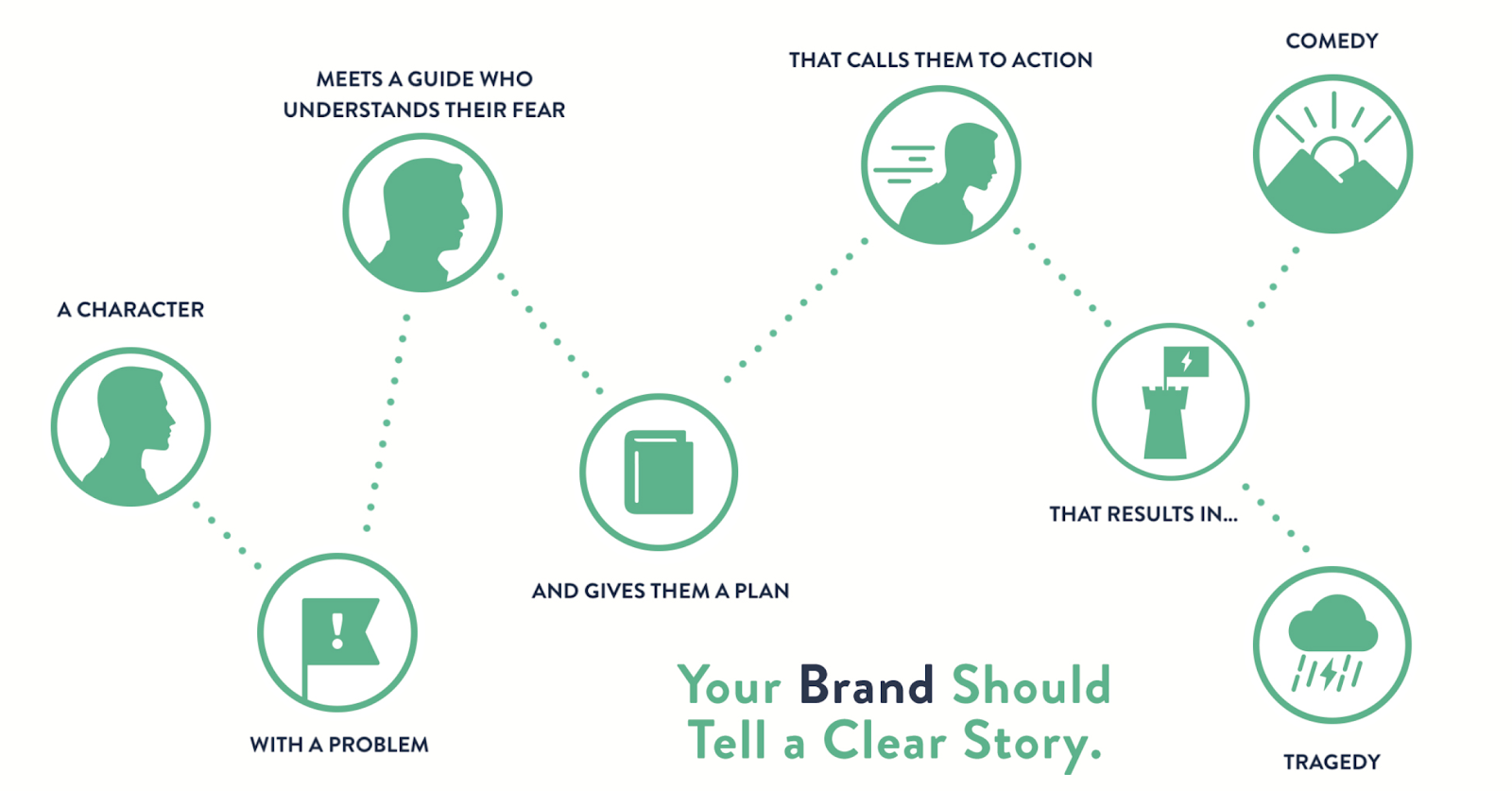
The hero (your prospect) has a problem, and even though they don’t know you, something (ad copy, search results, a well-placed referral link) is hinting that you may be able to point them in the right direction.
This is your chance to enter the story, but remember — your prospect is at the beginning of their journey. It’s still relatively easy for them to “try out” different guides. Whether that’s you or someone else.
So, how can you make sure your problem-aware landing page shows that you understand the problem?
How do you show that you are worth your prospect’s trust?
Empathy. A whole heaping amount of empathy.
Working Empathy into Your Problem-Aware Landing Page
According to Googs, empathy is the ability to understand and share the feelings of another.
Easier said than done.
Because here’s the tricky thing about landing pages nowadays: they usually check all the boxes.
Clear, benefit-driven copy
Key elements above the fold
Intuitive user design
To see whether or not you’re “optimized” for problem-aware visitors, you have to dig a little deeper. You have to look beyond the 5-second test and ask yourself if you’ve appropriately positioned yourself as the helpful guide.
To help you do that, let’s look at a few common pitfalls that stop well-meaning copywriters, marketers, and business owners in their well-meaning tracks.
Pitfall #1: Misplacing the source of the pain
Your problem-aware visitor might not have a full grasp of their problem, but it’s usually not due to complexity. It’s usually because they haven’t fully considered their situation.
Sometimes they aren’t even aware of what the real problem is.
A good opportunity for you to guide them, right? Absolutely. Except when you aren’t clear on what the real problem is either.
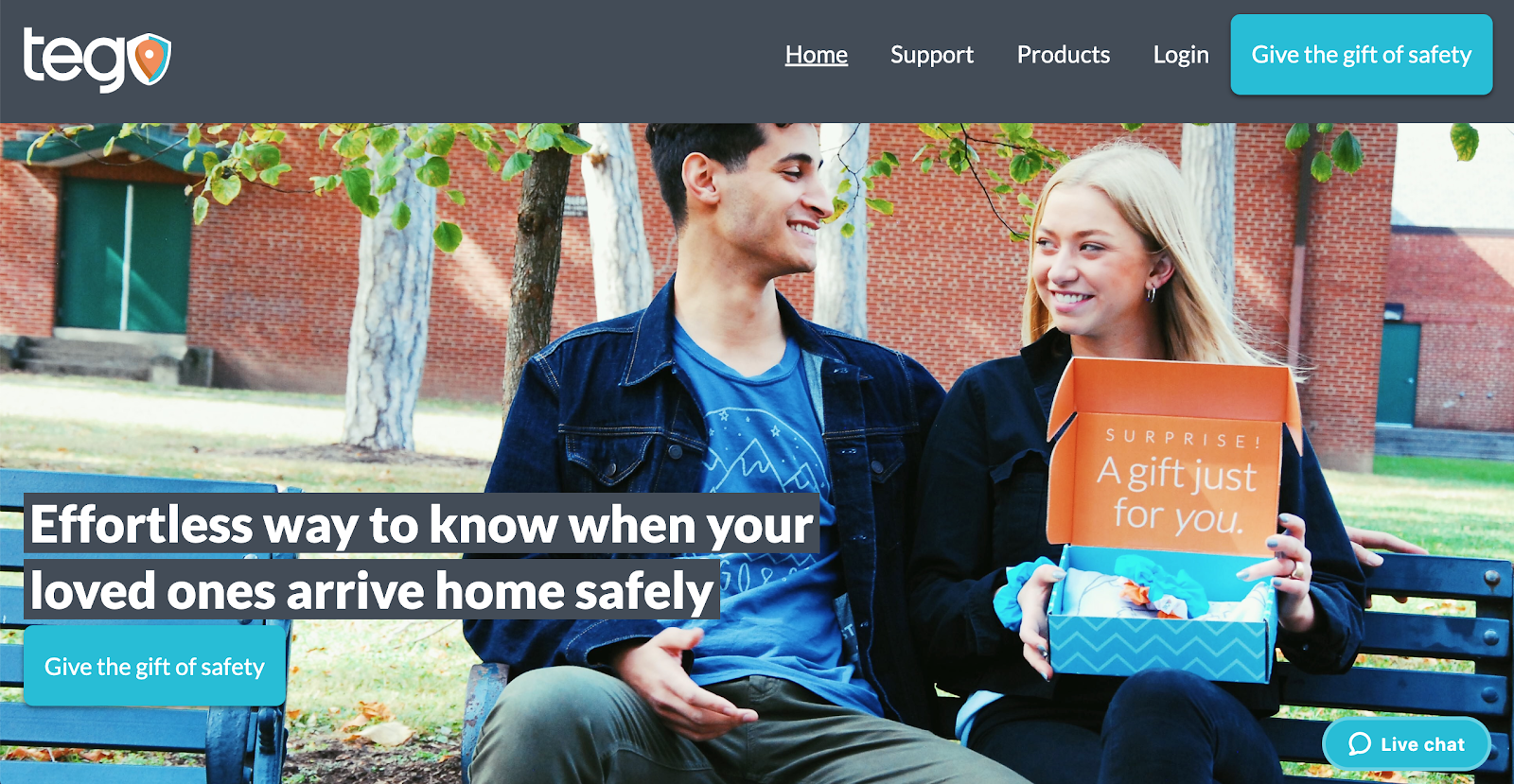
Take Tego. A location-tracking mobile app to help make sure friends get home safely.
It’s not hard to see what problem they are trying to solve: Not knowing whether your sweetheart made it home safely after a long night of “studying.”
But is that the real problem? Is there really no easy way to know if your friend got home safely?
I would argue there already is – a text message works just fine.
But that text message is connected to the real problem.
We always say “text me when you get home” but our friends never remember to do so. And if something were to happen, you would never know. (Are they gonna text you if they’re kidnapped? Not likely.)
The real problem is the drunk (I mean, over-studied) person following through and remembering to text their friends that they got home – a common situation that many college kids could relate to… and would probably consider a problem that they’d like solved.
As a problem-aware visitor, it’s easier to see the value when the problem references a specific situation, rather than a generic framing of a problem.
If your prospect doesn’t fully appreciate the problem in the context of their own experience, they won’t have any motivation to search out a solution.
Tego could address the real problem more accurately with a headline like:
Because You Can Do Better Than “Text me when you get home”
Or
Don’t Leave Your Friend’s Life in the Hands of a Text Message
Not only does focusing on a specific aspect show a deeper understanding, it then becomes more of a priority in your prospect’s head.
Which leads us to the second pitfall.
Pitfall #2: Focusing on the surface-level problem
Folks with problems don’t always know why they have problems.
In fact, most of the problems that drive us to look for solutions aren’t problems at all. They are symptoms of the real causes.
I like framing customer problems into two types: internal and external.
External Problems = Symptoms. Things that we Google solutions for.
Internal problems = Causes. Things we don’t tell anyone due to shame, embarrassment, unawareness or complexity.
Problem-aware visitors might truly believe that the problems they are Googling are the reason they are looking for relief. But most (if not all) of the time, they’re driven by something deeper.
As the copywriter, you have to go deeper too. Even when a company solves a seemingly simple problem – like buying a backpack.
Okay, so let’s look at this example from the perspective of internal and external.
External Problem – “I want a cool backpack.”
Easy enough.
Internal Problem – “I need something cool and functional enough that people can see me owning it without it being flashy and annoying. Oh, also I wanna align with a brand that represents me as a worldly, conscious traveler. Preferably one that wants to support local initiatives and cares about using artisanal methods, rather than big factory production. Bonus points for funky patterns and extra-zippy zippers.”
Jeez.
Would their prospects be able to tell you that right off the bat? Probably not.
Would they even agree that they want all of that if suggested to them? Probably not.
But it’s your responsibility to dig into BOTH these external and internal drivers. (Hey, customer research, you sexy beast.)
Get their head nodding by addressing an external symptom, and then back that up with an internal problem to show how much you understand their plight.
If you’re down for a three minute halftime speech, here’s a video where I break down internal and external problems a bit further.
Hitting them both is huge for you and your problem-aware landing page visitors.
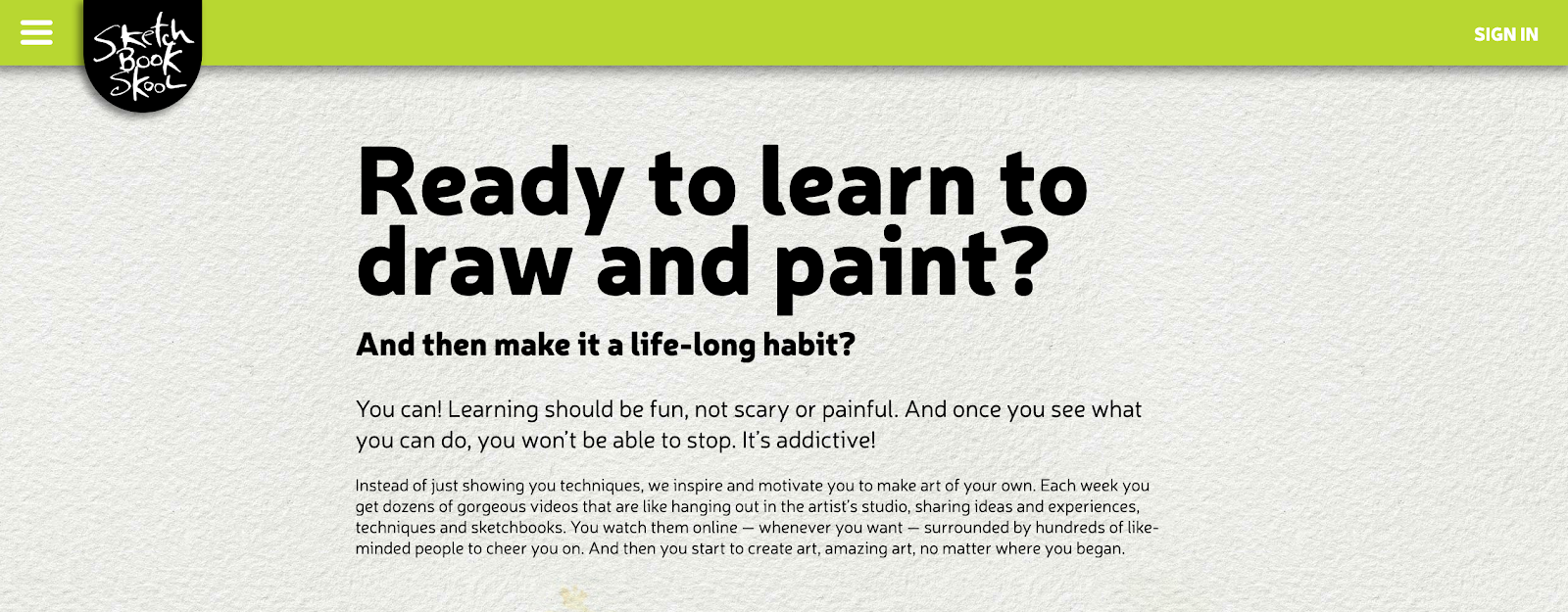
Let’s look at a couple of examples that nail it.
External problem – “I want to get better at drawing and painting.”
Internal problem – “ I’ve always looked up to artists, and I want to become one myself. It’s not that I just want to draw good pictures – I want a life-long relationship with art. I want to become an artist rather than just a fan or observer.”
See how this distinction creates a deeper level of empathy?
Touching on those internal problems just shows that you get it.
You aren’t just offering a product or solution. You are providing relief, and an opportunity for lifelong transformation.
Sketchbook Skool could have said “We have the best teachers in the world and you will start drawing and painting in 10 minutes flat.”
But they know what their customers really want – a lifelong habit.
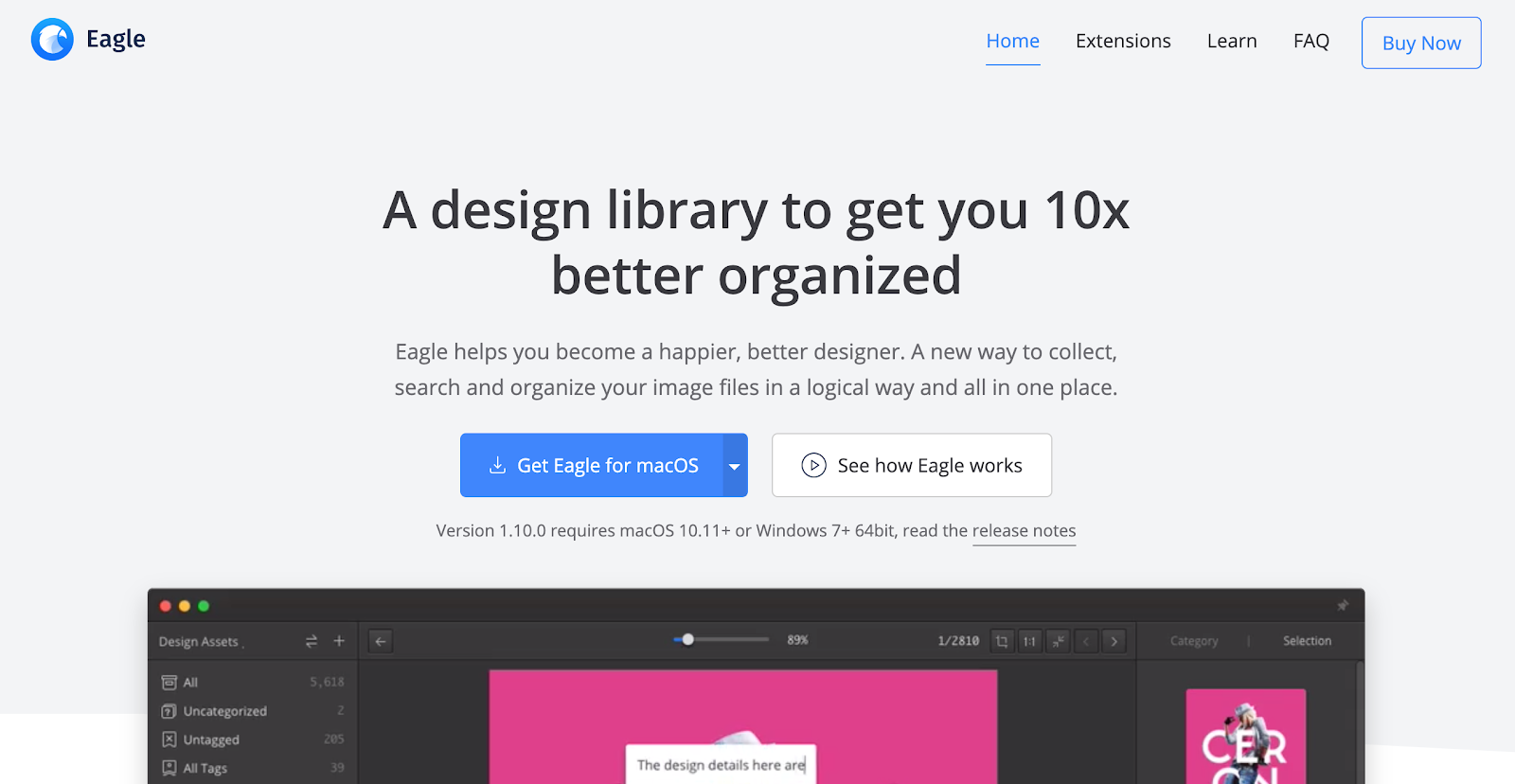
Here’s another one.
External Problem – “I need a better design library.”
Internal Problem – “My work life is a cluttered freakin’ mess. I waste so much time going through folders, renaming files, and clicking around while I should be focusing on client work so I can make more money.”
Eagle shows an understanding that even its audience might not get about themselves.
They realize that disorganization is the reason so many designers get frustrated and unhappy. They dig into the internal problem – the real cause driving them to look for a solution.
As a problem-aware landing page visitor, this tells me that they are designers too, not just some smart dudes who built a product. They’ve been through it, and they know what their audience needs to finally find relief.
Empathy.
Finding the real source of pain and addressing both internal and external problems will solve a lot of your problem-aware landing page issues. But there’s one more pitfall that copywriters should always steer clear from.
Pitfall #3: Forgetting the emotion
According to Paul Ekman, psychologist and co-discoverer of micro expressions, there are six basic emotions that every human in the world shares:
Happiness
Sadness
Anger
Fear
Surprise
Disgust
The reason emotion is so powerful in copywriting is because every reader has his/her own frame of reference for a given situation.
A lot of copywriters misconstrue the 5 second rule as “Since I have to quickly show that I’m valuable, I better explain exactly what we do right away.”
The result? Landing pages that breeze over the problem, completely minimizing the emotion and human element that is driving the audience to search for a solution in the first place.
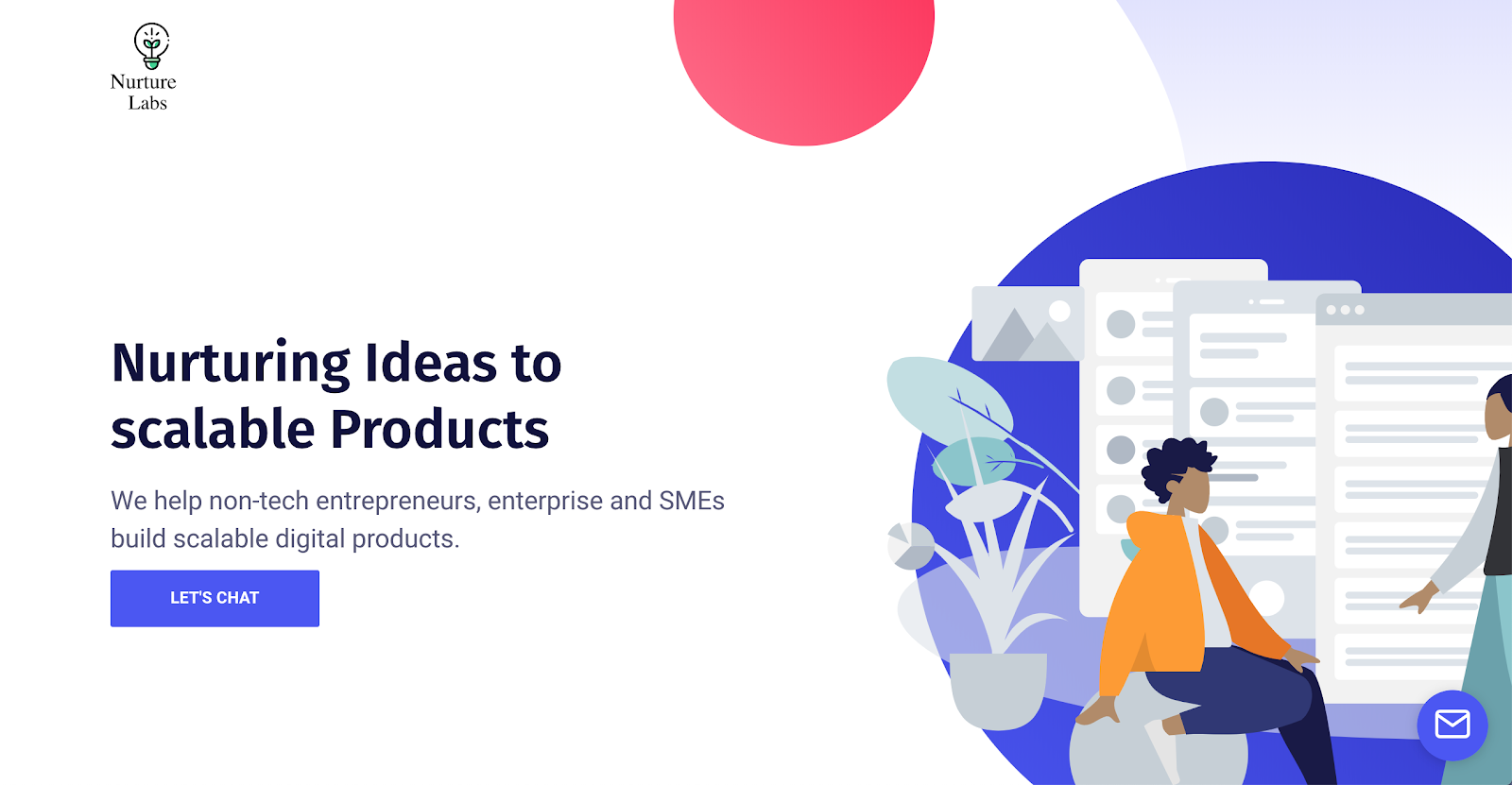
Take this relatively standard SaaS landing page.
I have no doubt that Nurture Labs is solving a very important problem. But they don’t sound very convinced. Moreover, they don’t sound very in tune with what’s actually going on in their prospects’ lives. If they are, in fact, in tune, why not show it?
Let’s analyze it a bit more.
The problem they are solving is this: scaling is hard.
Ok fine. But they aren’t really showing prospects that they understand that scaling is really hard. There’s a lot that goes into it. Like, having to sacrifice time with your family, relationships and often money out of your own pocket just to see your baby flourish.
All the emotion that goes behind the problem is completely ignored upon first glance of this landing page. Fear, happiness, excitement, anguish. All emotions that, if I were able to feel them as a problem-aware landing page visitor, would instantly bring me closer to the brand.
Remember: At this stage they aren’t necessarily looking for a solution. They are looking for someone who feels their pain – someone who can really talk to the problems and emotions they’re having.
If I were Nurture Labs, I would ask myself things like “what are the potential implications if an entrepreneur isn’t able to scale?” and “what problems in their lives are actually causing the scaling problem?”
That would lead me to copy (and a more appropriate CTA) that better targets prospects’s pains. Ideas like:
“Need to free up your time and energy?”
“Is a slow pipeline preventing you from scaling?”
“Have you maxed out your resources?”
“Do you not know where to go from here?”
However you put it, you need to dig into the real life issue behind the problem.
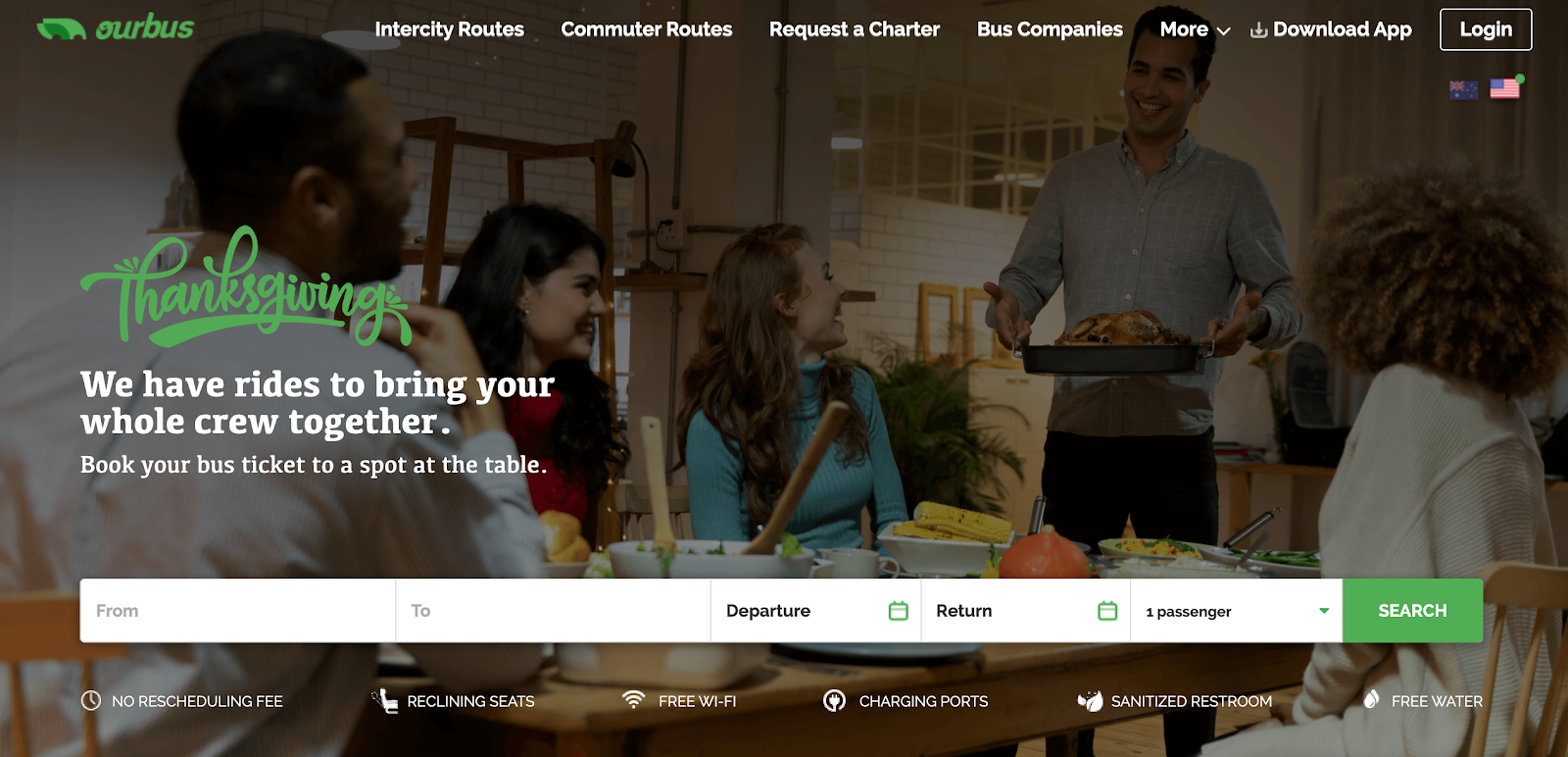
This doesn’t mean you have to use a lot of time or copy to marinate on the problem. You can speed up this connection by using emotion. Take this great landing page from Ourbus.com:
External Problem – I want to take a trip.
Internal Problem – I miss my friends and I don’t want to be alone at Thanksgiving.
Rather than leading with “cheap bus rides anywhere in the country,” which would minimize the problem, they dig into the internal problem and the emotions surrounding it: the human desire for friendship and social contact. It also amplifies the ramifications of not finding relief to the problem. (You’ll be eating a turkey dinner for one.)
Skipping over the emotion is a fast way to make yourself replaceable.
Coming to terms with your problem-aware landing page
At this stage, your prospect isn’t looking for you to tell them what they should understand about your solution. They are looking to be understood.
Later in the customer journey you will have time to show your capabilities and expertise. Right now you need to marinate in the pain.
Your prospect needs to know that you can help.
No amount of clever copywriting can substitute for deep customer research. Dig into the hopes, dreams, fears and limitations of your prospects. Tune in to the conversations already happening in their minds.
If you can get your prospects head-nodding at this stage, the all-important transaction of monies will be much easier and more fluid down the road.
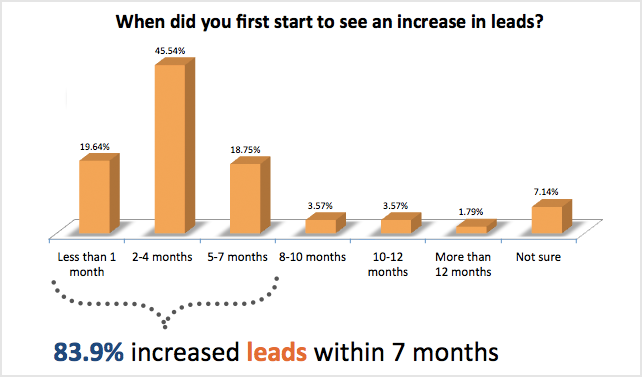
According to Hubspot, 83.9% of companies that use inbound marketing see an increase in leads within 7 months:
Not to mention, the stats and studies listed above happened in 2009, 2011, and 2013, respectively.
The competition to get more traffic and leads through content marketing has only increased.
Be honest: do you want to wait 6-12 months and ONLY get more traffic or leads?
I don’t know about you, but I don’t wanna wait half-a-year to start getting more organic traffic or inbound leads.
Nor do most startups I talk with.
In six months, startups want SALES.
You see, traffic is a vanity metric. And while leads are nice, it’s costly to chase after prospects which only clog your sales pipeline.
But more revenue means your marketing works.
I respect what Bonini and Sheridan did. But they had teams cranking out content, building links, and paying for ads like a retail store the day before Christmas.
Don’t get me wrong. If you have those resources available, use ‘em to your advantage to get faster results.
All I’m sayin’ is there’s a more efficient path to get quick sales with content marketing.
Why content marketing is often a slower path to sales than it should be
The more efficient path I’m about to teach you helped me double a startup’s annualized revenue in 6 months.
This type of marketing is commonly called product marketing. Product marketing is the intersection of three fields: product, marketing and sales, and customer research. By understanding how these three fields work together, I understood how to get sales faster than content marketing by itself.
You see, while a content marketer is likely focusing on traffic, a product marketer needs to know what traffic converts into customers. We do this by talking to customers, positioning the product, determining the price, and launching the go-to-market strategy.
As a product marketer for early-stage startups, I’m relentlessly testing what gets customers faster for my clients.
From my tests, I’ve found two areas content marketers often ignore, which leads to slower growth:
Defining the startup’s positioning with a unique sales proposition.
Knowing what content and keywords will generate sales sooner.
Content marketers often ignore positioning because it’s not easy to track how it leads to more traffic. Instead, they often “position” a startup by placing whatever keywords bring in more organic traffic on the homepage.
Because content marketers focus on getting more traffic, they also tend not to learn what keywords generates sales sooner. At best, they learn certain keywords have higher buyer intent.
They often look at PPC click costs to estimate buyer intent because they lack a meaningful framework. This approach is flawed because cost-per-click only tells you what advertisers are willing to pay. It doesn’t tell you how likely customer is to convert.
I say this as a reformed content marketer. It wasn’t until I worked with early-stage startups that I realized product marketingwithcontent marketing was a more efficient path.
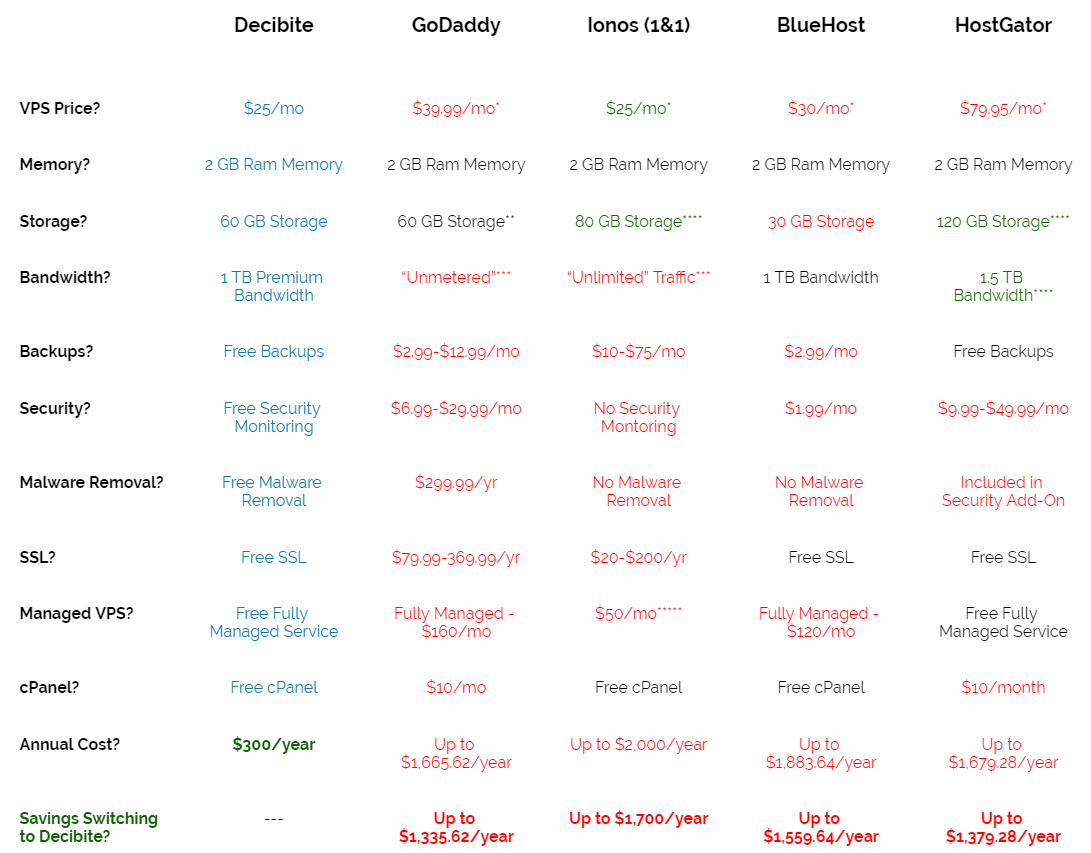
Wanna learn the product marketing playbook I used to help Decibite double (+127%) their annualized revenue in 6 months? Then keep reading…
To understand the principles of product marketing playbook, we need to take a lesson from two of my favorite copywriters:
Rosser Reeves, who taught me the importance of creating a unique sales proposition (USP).
Eugene Schwartz, who taught me a framework to figure out what keywords will generate sales sooner. This framework also helped me to learn how the USP should improve the content strategy.
How Rosser Reeves taught me the importance of turning a weak-’n’-flabby value prop into ajackedunique sales proposition (USP)
Quiz time!
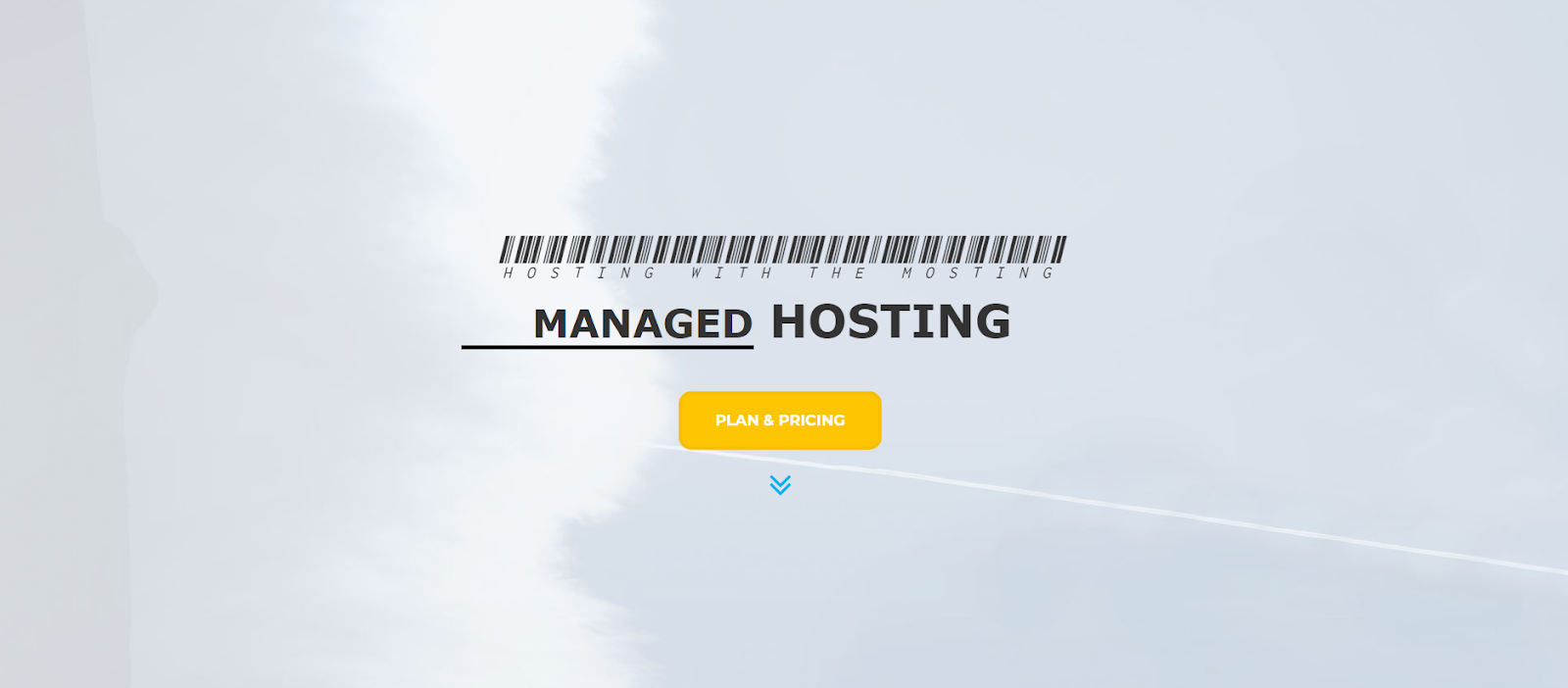
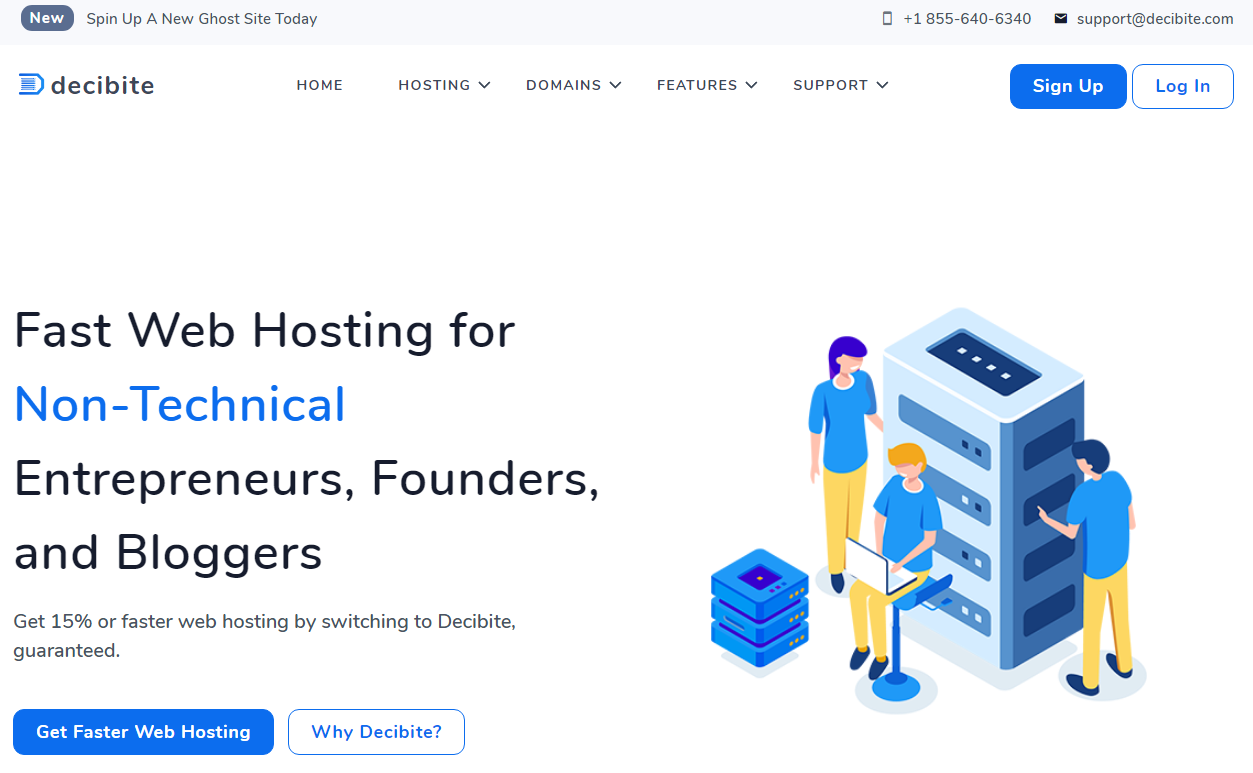
Which value prop do you think made Decibite more money?
Homepage value prop #1… Hosting with the Mosting: Managed Hosting
“Reeves taught me more about advertising than anybody I’ve ever known.”
Reeves isn’t the only marketer who believes in the power of a strong value prop.
Copyhackers founder Joanna Wiebe wrote a whole book on ‘em, based on a year of value proposition testing she did.
And Peep Laja, the founder of conversion optimization agency ConversionXL, also believes in the power of a USP, saying this:
“If I could give you only one piece of conversion optimization advice, ‘test your value proposition’ would be it.”
To clarify: a unique selling proposition is a value proposition. But not every value proposition is a unique selling proposition. (I’ll explain more in a moment…)
How to come up with a unique selling proposition (based on how the greats have done it)
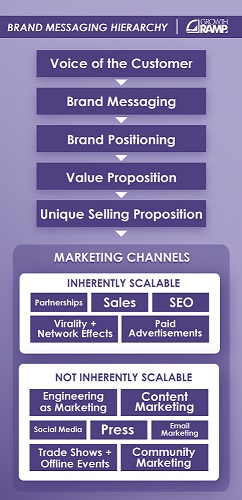
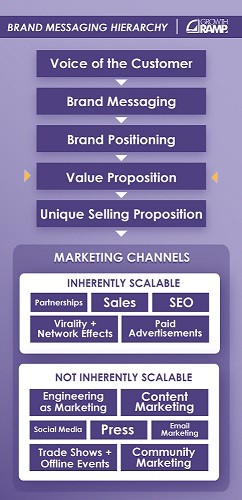
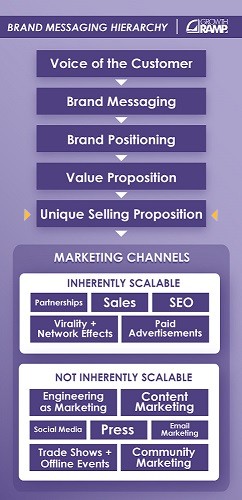
I’m gonna make that whole diagram clearer as we go. But let’s start with the quick essentials.
How exactly do you come up with a USP that will work with your brand messaging and speak to your audience about something that’s unique to you? It comes down to five steps.
The 5 steps of creating a unique sales proposition
Talk to your customers.
Survey the market.
Identify your positioning.
Turn that positioning into a value proposition.
Turn your value prop into a USP.
Let’s dig into each of those five steps.
Step 1: Talk to your customers.
You are not in the business of selling a product or a service. You are in the business of providing a solution to someone’s problem. As such…
Your goal is to gain insights on what customerssay they’ve done in the past or are currently doing. You should also focus mainly on open-ended questions to get more in-depth responses too.
Do this by talking to them. The Copyhackers blog has many techniques on how to talk to your customers:
You wanna find out what they say because this language will fuel your copy.
Understanding what previous customers have said, done, and thought, you can predict what future customers will say, do, and think. That is, as long as your future customers are similar to your past ones (which I’ve found are often easier to acquire).
By talking to your customers, you can find out why your customers choose to do business with you rather than with your competitors.
What questions should you ask your customers when developing a USP?
Think back to the days before you started using our product/service. What was your life/work like before us?
If you can recall, what made you start looking for our product?
Since starting to use our product/service, what would you say is the can’t-live-without-it improvement it’s made to your work/life?
If you were to run our company, what is ONE thing you would do differently?
If you can recall what competitors have you used in the past, or are you using alongside our product now?
What did you like most about them?
What was your biggest complaint? Was that the reason you left them?
Imagine you were to talk to a friend/coworker about our product/service. What would you say about us that you’d be unlikely to say about any other solution like ours that you’ve used?
You will want to document what the customer is saying. For best results, you should consider just listening and taking notes on what you want to follow up on during the interview.
If you document what the customer is saying as she’s saying it, you may notice some gaps afterward. Instead, be sure to record every interview with your customer’s permission. Alternatively, you can bring in a second interviewer to take thorough notes.
Also, avoid the feeling you need to reach statistical significance with these interviews. There is an art and a science to writing a unique sales proposition. The goal is to squeeze a lil’ more science into the process than art.
Now it’s time to make sure the market agrees with what you’ve learned.
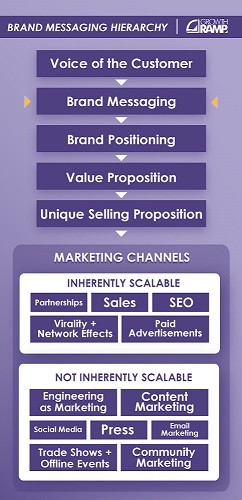
Step 2: Ask the market to validate brand messaging.
If we refer to the Growth Ramp diagram I mentioned earlier, we’re now at the second step:
After interviewing your customers, I recommend you survey your market. This will give you more data to compare to what you learned from your customer interviews.
Your goal is to avoid only confirming what you’ve learned. (AKA, you’re avoiding confirmation bias). Instead, the goal of market research is to help you validate or invalidate what you’ve found.
The tricky thing about surveying people is that you can never be sure you’re surveying someone who’s actually a match of your future customer. This is an added danger of mining product reviews and social media eavesdropping.
Even customer surveys may not allow you to segment the market that will or should buy what you offer.
So take everything with a grain of salt.
You’re looking to triangulate data, not arrive at a guarantee of messaging success.
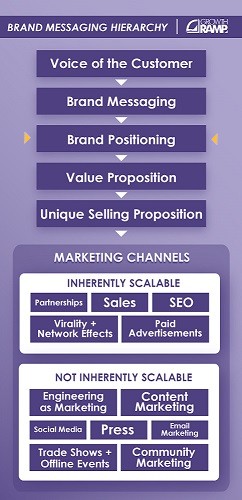
Step 3: Use the brand messaging to start figuring out your brand’s positioning.
First, let’s define brand positioning.
Brand positioning is where your brand sits in the hearts and minds of customers, particularly in relation to your competitors.
Basically, your positioning is what separates you from the pack.
Before you land on your positioning, you first need to know how your competitors position themselves in the market. Also known as gathering competitive intelligence.
To gather this competitive intelligence:
Start by listing all your competitors.
Look at how each competitor positioned their company.
Step 3.1: Start by listing all your competitors.
It’s likely you already know a handful of your competitors. Do a quick 3-minute brainstorm and list every competitor you can think of off-the-top of your noggin’.
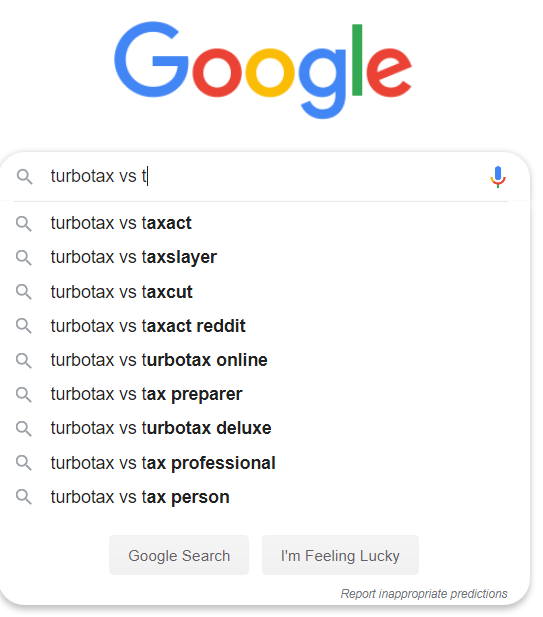
Next, find out what competitors your customers compare you to, including solutions that may not be direct competitors. You should have landed this info doing your customer interviews. If you didn’t (or need more data), you can use Google auto-suggest to help you find even more competitors:
Type in the name of your biggest competitor and add “vs.” afterward.
Then go through each letter of the alphabet.
Step 3.2: Look at how each competitor positions their company.
With your competitor list in hand, you’re ready to determine how each competitor positions their company in the market.
A simple way to see how each competitor positions their company is to write down:
What each competitor lists on their homepage title tag.
What each competitor has as their main header on the homepage (typically their H1).
For example…
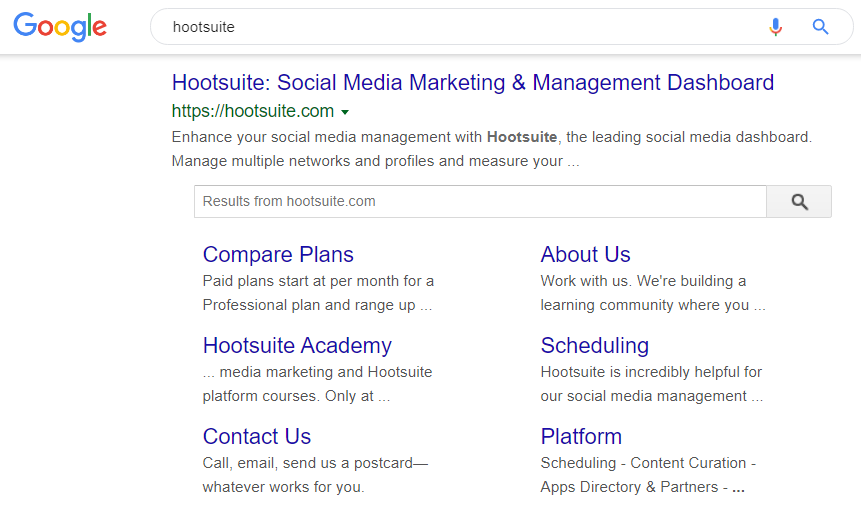
With a quick trip to Google, you’ll find Hootsuite’s homepage title tag as “Social Media Marketing & Management Dashboard.”
The main header on Hootsuite’s homepage is, “Manage all your social media in one place.”
Thus with this 80/20 trick, you learn that Hootsuite wants to help you manage all your social media.
Perhaps you’re now asking:
“How is Hootsuite different than Buffer, Sprout Social, and the 50-some odd other social media management tools out there?”
Creating that distinction is what you’ll learn in the next step…
Step 4: Express your brand’s positioning with a clear value proposition (pre-USP).
Although you may conflate value propositions and unique sales propositions, I’d like to encourage you not to. Let me show you how, in my years as a marketer, I’ve seen a distinction between value props and USPs.
For starters…
A value proposition is the value you promise to deliver to your customers.
Allow me to illustrate.
While competing in The Amazing Race, Blake Mycoskie took an eye-opening trip to Argentina.
Four years later, Mycoskie revisited Argentina on vacation. There he met a woman who was volunteering to deliver shoes to shoeless children. The experience fueled his desire to start a footwear company to help more children in need. His goal was to donate one pair of shoes for every pair someone bought.
You may have heard of this famous footwear company. It’s called TOMS.
With nothing more than 200 pairs of shoes and a strong value proposition, Mycoskie began to pitch journalists.
A value proposition is the value you promise to deliver to your customers.
The better you communicate the value you promise (AKA, your value prop), the more sales you’re likely to make. That is, as long as there’s a market to hear and love that promise, which I’ll dive into discussing in a moment.
This brings us to this stage in the process of writing a value proposition:
A strong value proposition should be:
Relevant to your customers’ acute pain. It’s written in the language of your customer, so your customers’ know it addresses their ongoing problems.
Clear about the value you offer and how it will improve their lives. A customer should be able to read and understand your value prop in five seconds (or less). There should be no hype or business jargon.
Specific about the benefits you offer. There is a concrete result a customer will get from buying from your product.
Different or significantly better than what your competition offers.
To create a strong value prop, you’ll want to find out what benefit your customers receive when using your product.
The questions I recommended you ask your customers earlier in this article will give you the data to create your value prop.
But here’s where things get tricky…
Your competitors can easily copy most value propositions. For example, I’ve found over 30 companies using the one-for-one model (source,source,sourrce).
Your competitors will often offer a similar value prop as you. Perhaps they will phrase it a bit differently. But it’s almost an exact copy in the eyes of your customers.
So how do you write a powerful value prop that makes sales… and is nigh impossible for your competition to steal?
By turning your value prop into a USP.
Step 5: Add specificity to turn your value prop into a unique sales proposition.
Here are some examples of unique sales propositions.
Domino’s: “Fresh, hot pizza delivered to your door in 30 minutes or less or it’s free.”
FedEx: “When it absolutely, positively has to be there overnight.”
GEICO: 15 minutes could save you 15% or more on your car insurance.
Can you see what each USP has in common?
Each of these company’s USPs has two characteristics:
A benefit that their customer finds valuable. This alone is valuable, but it would only be a strong value proposition, not a USP. “Fresh, hot pizza delivered to your door” could apply to Domino’s or any pizza joint. Further, the customer takes on the risk if the company fails to deliver on the value proposition.
A specific claim that a customer can test to see if it is true. “…in 30 minutes or less or it’s free” becomes a guarantee where Domino’s takes on the risk. Yes, using a specific claim could influence a competitor to steal it. Yet, a USP often requires a change to the product or the company’s operations.
How to turn a value proposition into a unique sales proposition
To turn a value prop into a USP, I recommend you create a specific claim.
Let’s go back to Decibite to help you see how I create USPs.
Decibite is positioning itself in the web hosting market. Web hosts typically focus on one of four benefits:
Security
Scalability
Speed
Service
Known as a point of parity, every web host needs to offer these four benefits. Decibite needs to offer all four benefits to be a worthy web host. That’s the baseline.
The emphasis a web host chooses to put on one of these benefits shapes its position in the market.
To find out which benefit Decibite should focus on, I looked at…
What customers liked about Decibite,
What the market research revealed and
What the founders specialized in.
After examining the research, I identified “speed” as the benefit Decibite should focus on. Decibite customized their servers to increase their customers’ server speed. Good. The product had the unique sales prop baked inside it.
Even better, the co-founders love learning how to improve server and site speed too. This obsession, experience, and personality are good signs of founder-market fit. In simple terms, founder-market fit is a signal how founders have the gifts and skills to best serve this market.
My job was to create a customer-facing unique sales prop out of the data.
To turn a benefit into a USP, you have two options, as I see it:
You can either find a USP already in your product and create a specific promise.
Or you can create a USP and change your product to match the USP.
To create Decibite’s specific claim, I looked at my USP swipe file and tweaked Geico’s USP to fit.
So “15 minutes could save you 15% or more on your car insurance” became “Get 15% or faster web hosting by switching to Decibite, guaranteed.”
I hypothesized that it would be a strong USP to test in the market.
But I didn’t stop there. And you shouldn’t either.
How should you use a USP to craft your content strategy?
Here’s how I applied Eugene Schwartz’s 5 stages of awareness to a USP to double (+127%) a startup’s annualized revenue in 6 months
Eugene Schwartz identified The 5 Stages of Customer Awareness in “Breakthrough Advertising.” Each stage of awareness will change what you write to make a sale.
What are the 5 stages of awareness?
As discussed in detail here and in a ton of other Copyhackers content, these are the five accepted stages of awareness that your prospects find themselves in:
Most Aware: Prospect is in an excellent position to decide to buy your offer.
Product Aware: Prospect is learning about your solution.
Solution Aware: Prospecting is reviewing solutions.
Problem Aware: Prospecting is experiencing pain.
Unaware: Prospect is pre-pain.
In greater detail, those 5 stages of awareness are:
Most Aware: Your customer knows your product, and he’s ready to buy. Now it’s your job to give him the best reasons to buy now – like time-limited offers and the most relevant testimonials.
Product-Aware: Your customer knows what you sell and often what the competition sells. But she isn’t sure it’s right for her. At this stage, you need to position your product against the competition.
Solution-Aware: Your customer knows the result they want. But they may not know of your product, or that it provides the results they’re looking for.
Problem-Aware: Your customer senses she has a problem. But she doesn’t know what’s the right solution.
Unaware: Your customer does not know of their pain, even though he has this problem. These prospects don’t realize they have a problem. Think of this audience like someone who has cancer, but a doctor has not diagnosed the issue.
As a product marketer, I used these 5 stages to create content for each stage of the buyer journey.
Sure, targeting certain SEO keywords will influence where a customer is when they first land on your website. (I’ll cover how you can target the right keywords in a moment). But unless you have a magic wand to direct them through your website, they’ll skip around your pages.
By targeting the 5 customer stages with different content, you’ll make it easier for customers to buy from you.
That means it’s not just about mapping stages of awareness to pages like so:
Most Aware: Short offer-focused page.
Product Aware: Product-detail page.
Solution Aware: Long-form sales page, home page.
Problem Aware: Home page, blog post.
Unaware: Blog post.
Instead, let’s look at how to create content for each of the 5 stages of awareness.
How can you create content for customers who are ready to buy (most aware)?
Most-aware customers are often looong-time fans.
He or she is almost certainly on your email list. Heck, he may have even bought another product from you. All you need to do is to give him a buy button, and he’s ready to sign up.
As an early-stage startup, a customer who’s most aware is a luxury.
It’s *possible* you might have a few of these customers on your list. More than likely, different pages on your website will help these customers move down the sales funnel.
“Okay Jason, why the heck did you write all that, only to tell me you don’t need to create content for these customers?!”
For one simple reason.
I’ve seen waaay too many home pages, sales pages, and every-other-pages with a call-to-action button buried 10-feet deep.
“I keep expecting to see a BUY NOW type of button…”
“The endless promo page was doing exactly what you said [the product] would defeat. Sounding like everyone else promising stuff and going so overboard that I was oversold.
Now I’m so far at the other end of the decision scale I’m delirious.”
That’s why when I create content for product-aware customers (the next stage of awareness), almost every. single. page. has a buy button at the top.
Speaking of product-aware customers…
Here’s how to create content for product-aware customers
Do you remember the “I’m a Mac, and I’m a PC” ads?
Comparison ads like “Get a Mac” are perfect for product-aware customers.
Why?
Product-aware customers are aware of their pain. They’re aware of solutions to that pain. And they know some of your competitors too.
But they’re just not sure if the product you offer is right for them. That’s why you want to create a comparison for these folks. Since product-aware customers are comparing you to your competitors, why not educate ‘em on why your product is the perfect choice?
Include accurate claims about your competitor’s product.
Include a disclaimer that you are not affiliated with your competitor in any way.
Not change or manipulate your competitor’s trademark or logo in any way.
Not mislead or deceive customers.
Just like all marketing campaigns you run.
To ease any other fears you may have….
Ever since 1972, the Federal Trade Commission (FTC) began to encourage comparative advertising. Their goal was to increase educational advertising. They believed this would spark positive competition to increase sales.
One benefit to comparison pages is that unhappy customers are already searching for an alternative.
This means these landing pages can bring you free traffic from Google.
There are four keyword categories you can target in this step. These are:
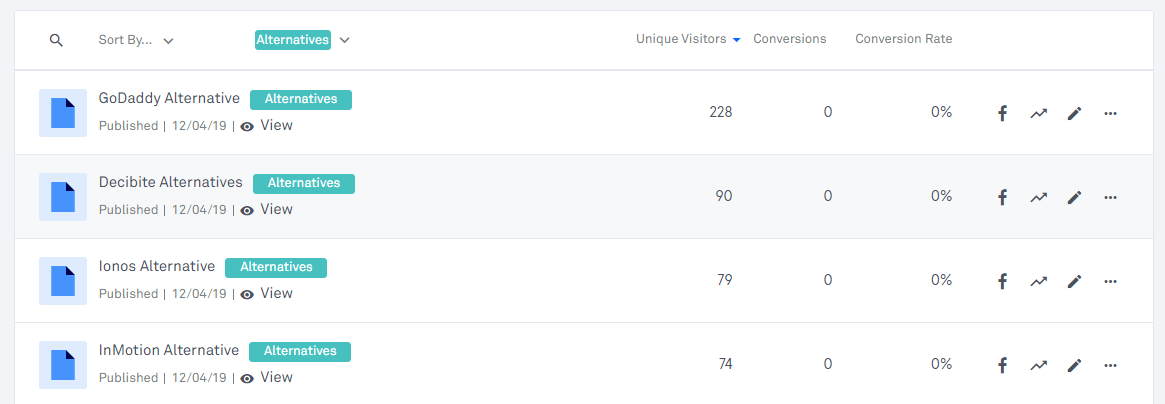
Alternative.
Example: Slack Alternative.
Pricing.
Example: Slack Pricing.
Review.
Example: Slack Review.
vs. .
Example: Slack vs. Hipmunk.
Are you worried that Google will penalize you for duplicate content for each landing page? Keep in mind, you’re duplicating and “refurbishing” your own content, not your competitors.
Google didn’t penalize me for refurbishing our own content.
I recommend creating a page for each of your product’s features. Then with each page, you will educate the customer on how your feature relates to your USP.
Ready to create content for problem-aware customers?
How to use USPs in your content for prospects who are experiencing a pain (“problem aware”)
Problem-aware customers feel intense pain. But they do not know your product exists. Nor do they know your product (or your competitor’s product) will cure them of their pain.
All this customer knows is that she has a problem, but she’s not sure there’s a solution.
Typically, you’ll find these customers when they hit a transition in their life.
She may have changed jobs, started a startup, or tried out a new hobby. With this new adventure comes questions she wants answered. Sometimes it’s an event she’s been doing for years which triggers a problem, like planning her social campaigns for black friday.
With this new adventure comes questions she wants answered. So she surfs the web until she finds her answers, such as this Black Friday article.
The “problem aware” stage of awareness is where traditional content marketing shines.
By traditional content marketing, I mean writing articles, creating videos, webinars, and the like.
There are several types of content you can use at this stage:
case studies,
calculators,
listicles,
teardowns,
how-to posts…
The list goes on and on.
My recommendation is to start by publishing original research, and here’s why.
This strategy is at the core of Copyhackers’s content’s success too. If you’ve read any articles on the Copyhackers’s blog, you’ve likely noticed several case studies:
Case studies, in effect, is a form of original research.
Now, what should you do about addressing customers in the final stage of awareness: totally unaware.
What content should you create for unaware prospects?
In general, “completely unaware” prospects need a lot of work to convert.
They haven’t felt any pain yet. So they aren’t motivated to pay attention to your content.
It’s like a person before they have their first child. They’re watching TV, and a diaper commercial comes on. They don’t care. But once they find out they’re expecting, suddenly they start to pay attention.
Unaware prospects are still prospects.
They’re just… not ready for you yet.
The content which works best here are ones marketers hope will “go viral.” The goal is to take a seemingly unrelated topic and tie it into the product.
LucidChart does a fantastic job showing their product in action while “explaining the Internet”:
All-in-all, I recommend AGAINST creating content for unaware prospectsunless:
You have a product that has a broad use-case (ideally with a free trial or freemium plan). Or,
You have a huge budget and can actually do some mass advertising.
Instead, focus more on people in problem aware, solution aware, product aware, and most aware stages.
Search engine optimized content is a long-term investment. But it doesn’t need to take 6-12 months for content marketing or SEO to “start working” either.
No matter your product marketing strategy, whether you use SEO, PPC, or some other three-letter acronym, there’s always a faster path.
What I’ve shared with you is the product marketing strategy I used to help Decibite:
Double their annualized revenue (+127%).
Triple their monthly traffic (+241%).
Quadruple their organic traffic (+331%).
All in six months.
If you start by creating your USP, you’ll have a clear and compelling reason for customers to convert.
You can then use this messaging as your content helps customers at each stage in your funnel. (Or any part of your go-to-market strategy, for that matter).
Perhaps as you apply this marketing strategy to your startup, you’ll grow even faster than Decibite did.
~jason
PS – If you found this guide insightful, I created this free 14-day product marketing email course. I think you’ll enjoy it because it goes deeper into all the product marketing strategies and tactics I wrote in this article.
Special thanks toJared Macdonaldfor reading and critiquing this essay.
Nobody knows this better than Professor Sophie Scott, Director of the Institute of Cognitive Neuroscience at University College London.
Scott and I were recently talking about her work on laughter and humor, when she muted her microphone to not cough in my ear. Seems like everyone needs to justify sneezing or coughing these days. “It’s hay fever, it’s not… well read the room hay fever, we’ve got enough going on.”
Not a week later, I read an article by SparkToro co-founder and CEO Rand Fishkin that starts “When folks ask me about how best to do marketing right now [during the COVID-19 pandemic], my answer is consistently turning into the same three words: Read the room.”
The next day I watched Karyn Buxman’s TEDx Talk where she suggests it’s “more important to ‘see’ funny than it is to ‘be’ funny.” And to do that you have to intentionally raise your awareness and start looking for humor, you’ll see funny things everywhere. And by being able to spot the funny (instead of constantly trying to be the funny) you’re opening your mind to opportunities and other viewpoints.
So ya, timing. (And serendipity.)
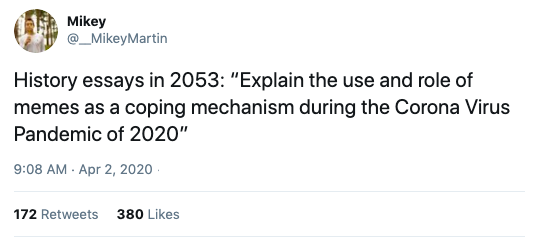
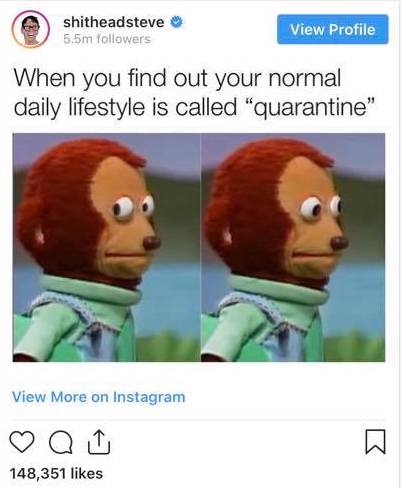
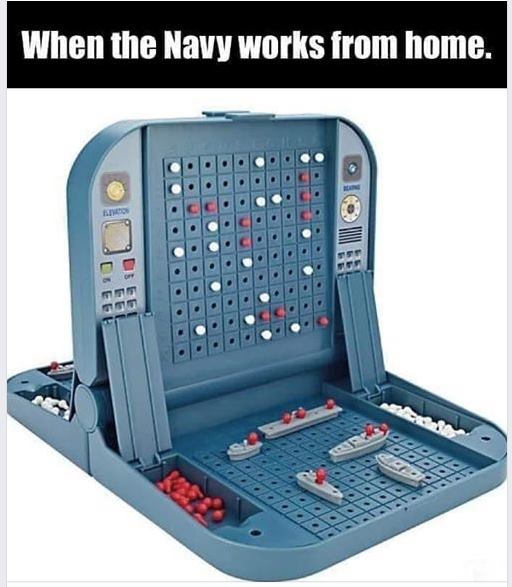
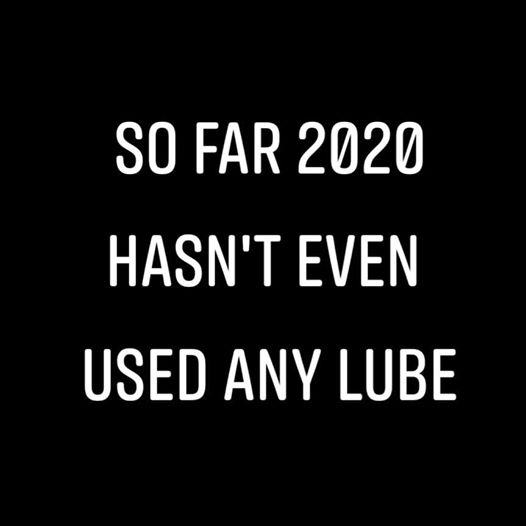
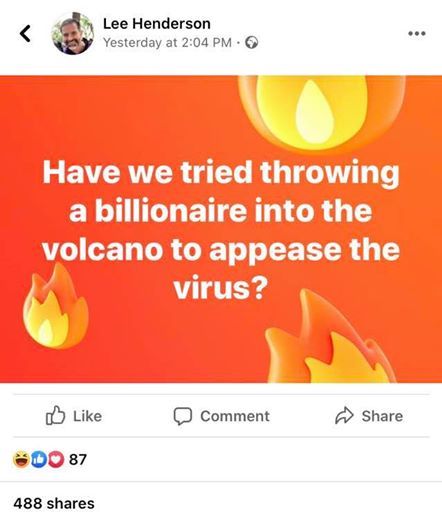
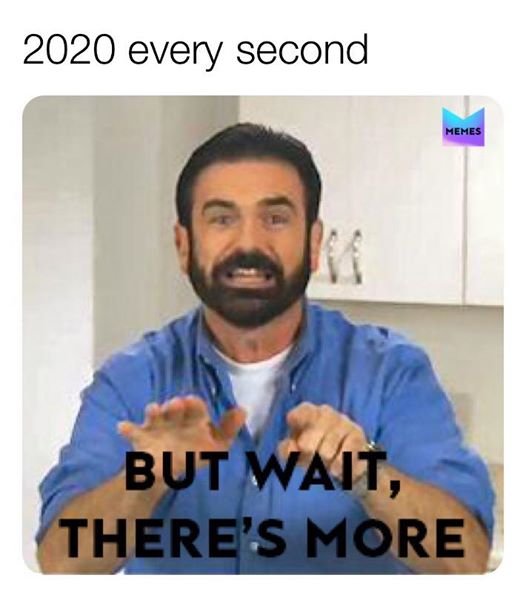
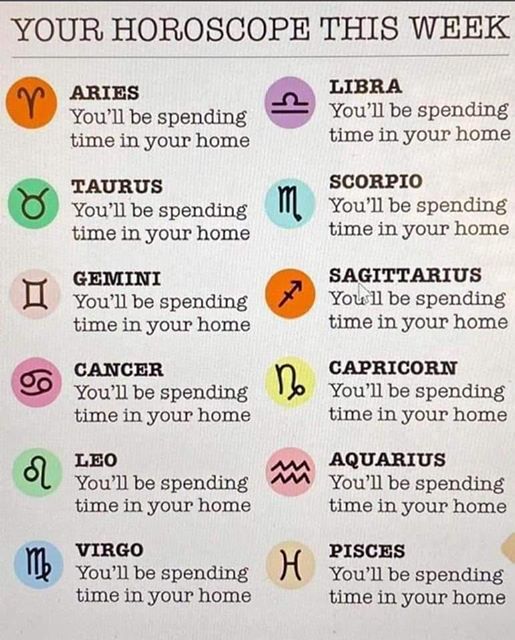
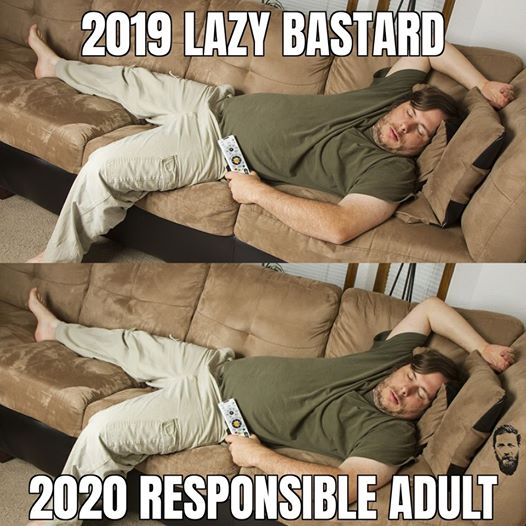
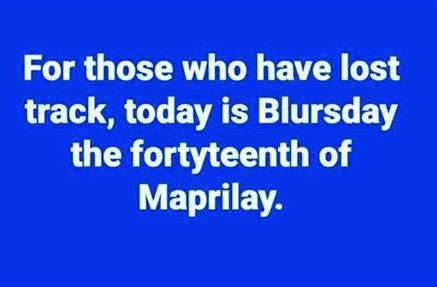
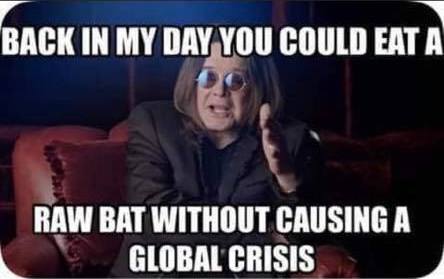
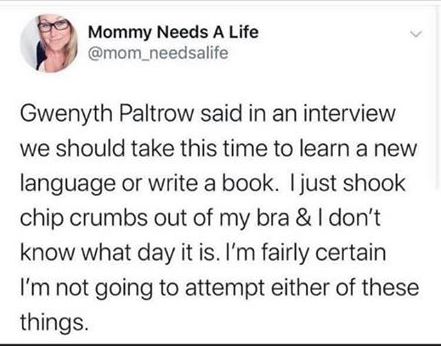
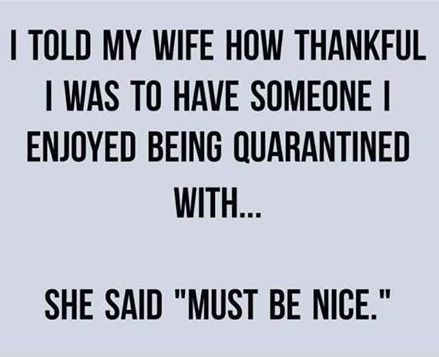
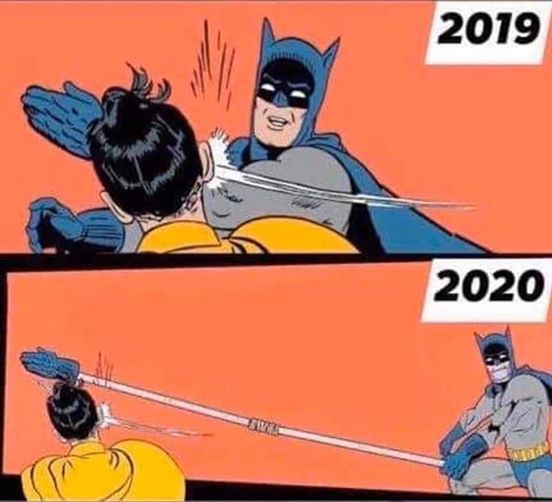
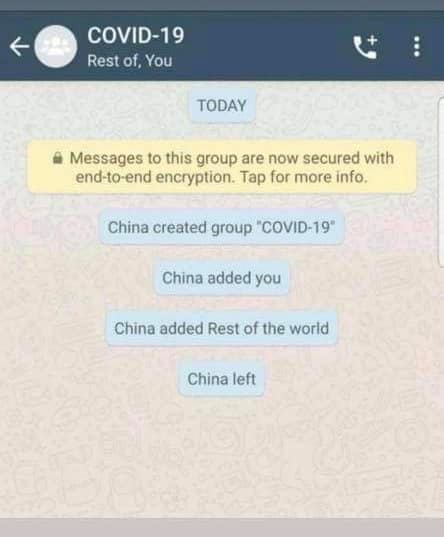
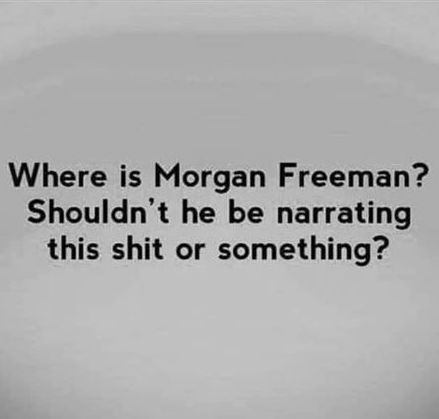
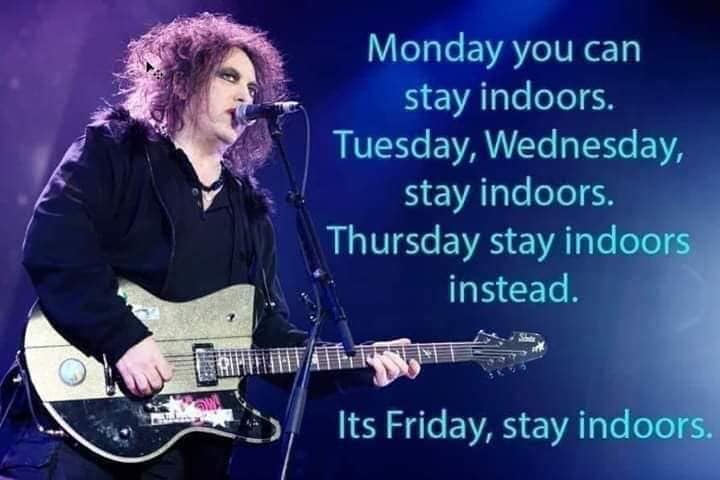
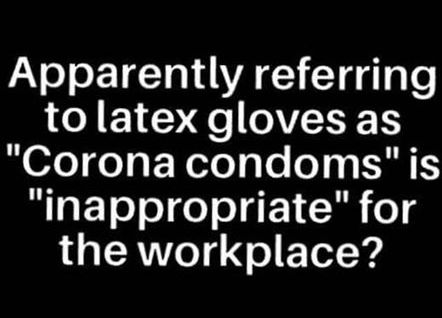
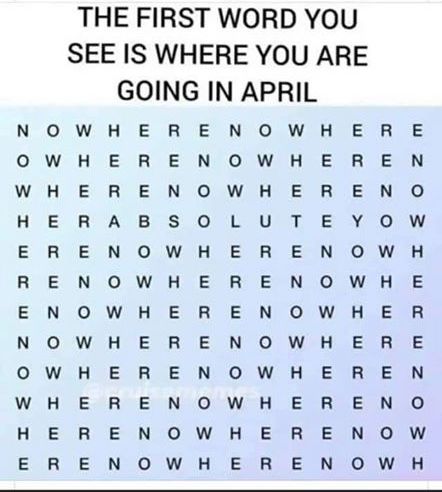
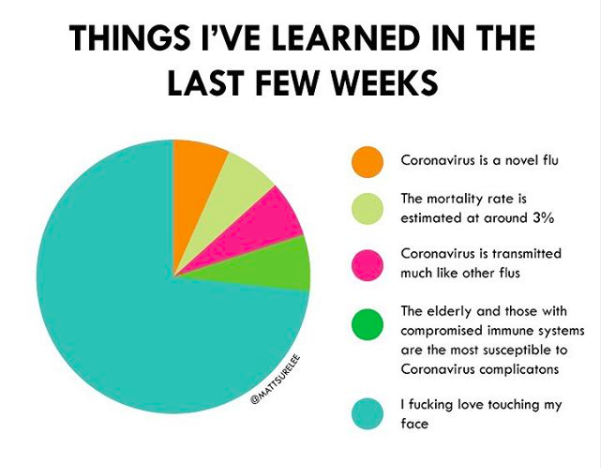
As it happens, I’ve been thinking a lot lately about all the memes (and humor) I’ve seen relating to COVID-19.
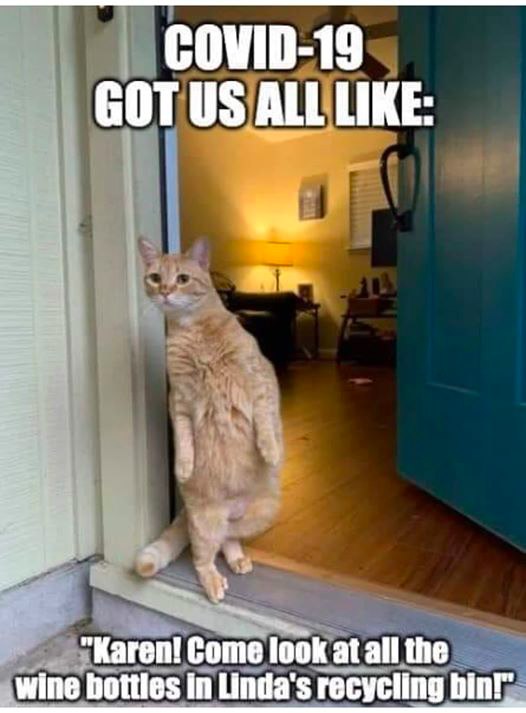
Pets at home not sure what to make of quarantine:
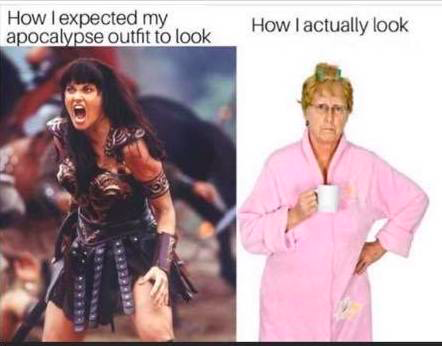
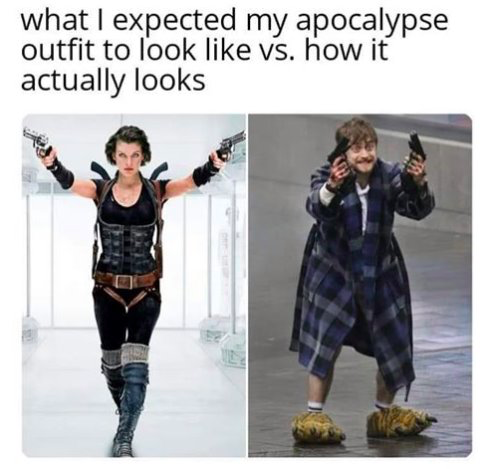
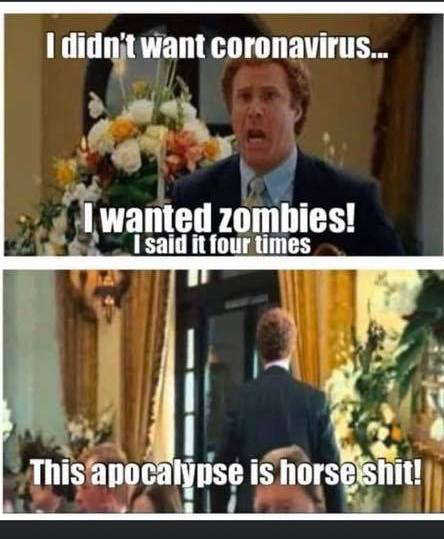
So many movies about apocalypse (including zombie apocalypse) that we had very different expectations… no one thought robes and slippers would be involved:
Parents who don’t normally home school are frustrated (and they probably don’t remember how hard it is to math):
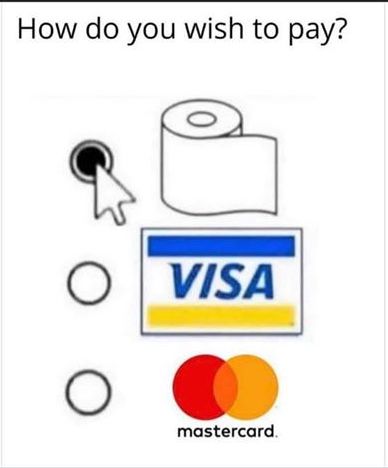
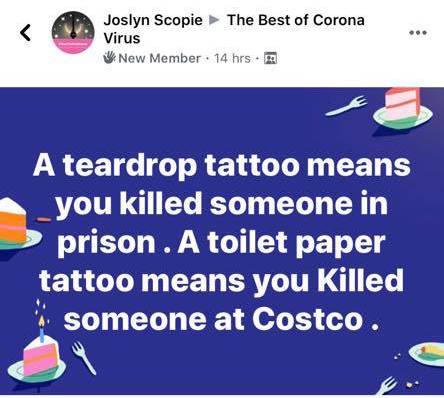
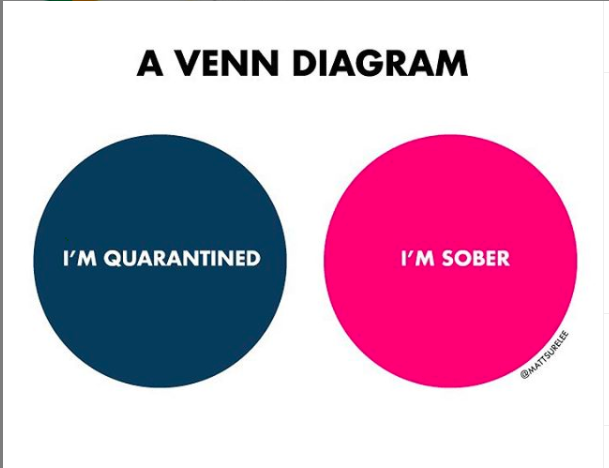
Toilet paper hoarding was the first thing that went out of control… it became a form a currency since not everyone could get any:
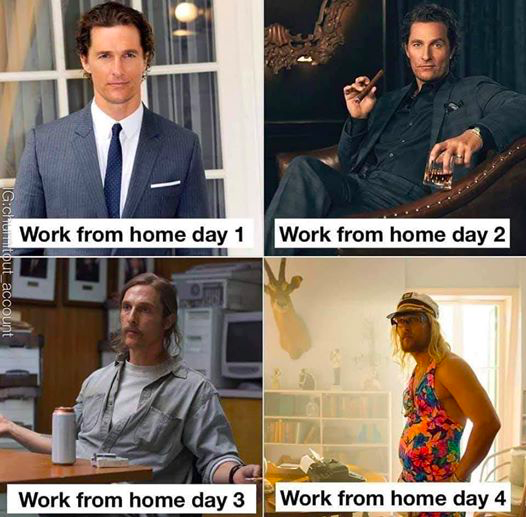
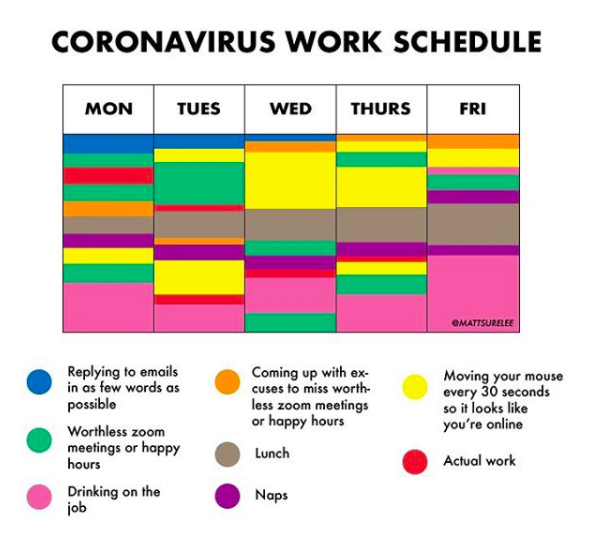
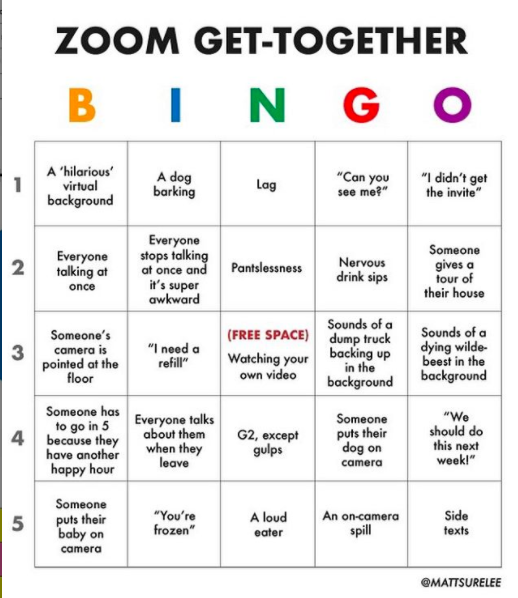
Everyone not used to working from home (and the luxuries it entails) are realizing you gotta be prepared for that impromptu Zoom call with the boss:
The longer this pandemic lasts, the more memes people seem to create.
I asked myself why.
Why are we resorting to memes during a time of crisis (and as people are dying)? And why are they so damn funny?
To understand COVID memes at a rudimentary level, we have to explore four factors:
Memes (and their place in our society).
Humor and laughter (and their anthropological, physiological and societal roles).
Sharing memes (and how that affects happiness).
Gallows humor (and its role managing stress, fear and even death).
What’s in a meme? And a covid meme, particularly?
At the most basic level, a meme is a representation of a phenomenon or concept that is repeatedly imitated and mutated ad infinitum. Memes are most often spread via social media and there are several different types of memes.
With everyone under quarantine, it got boring quickly. We started paying way more attention to our neighbors:
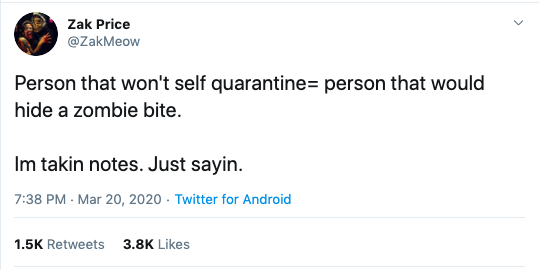
Observations in the wild: pay attention to how people are acting and reacting. We’re taking notes.
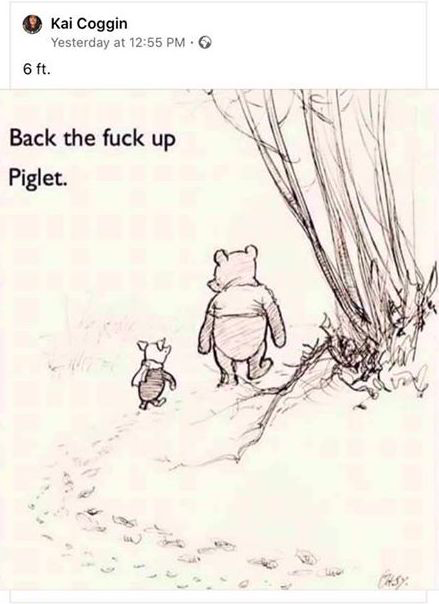
I mean, is there anything as adorable as Pooh and Piglet taking a walk in the forest while Pooh imparts his Taoist wisdom? But even Pooh bear doesn’t want to catch COVID.
Another, perhaps more precise definition of a meme was coined by Limor Shifman, senior lecturer in the Department of Communication and Journalism at Hebrew University of Jerusalem, in her book Memes in Digital Culture. Shifman suggests a meme is a:
“group of digital items sharing common characteristics of content, form, and/or stance that were created with awareness of each other; and were circulated, imitated, and/or transformed via the Internet by many users.”
Though the book dates back to 2013, this definition still holds.
The internet of the 21st century is driven by a “participatory culture,” one in which audiences are no longer being fed pop culture, but arguably creating it themselves. And memes are one way we’re doing that. In other words, memes are a form of communication; they’re how we convey our ideas or observations and how we voice our opinions and viewpoints to others in a fun way.
Whereas in past years, copying (or plagiarism of sorts) was frowned upon, Shifman posits that Web 2.0 culture is propelled by copying and imitating, which is (in the case of memes) the best form of flattery.
“In this environment, user-driven imitation and remixing are not just prevalent practices: they have become highly valued pillars.”
Hence memes like these.
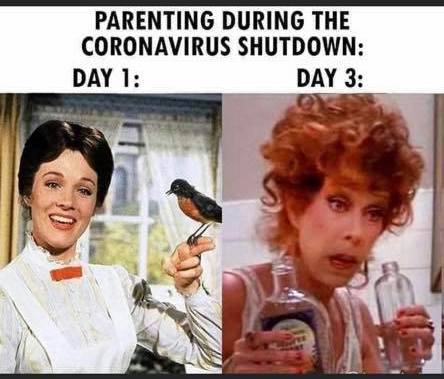
This one appeals to the Gen Xers in the house. Mary Poppins is the epitome of what we all aspire to be at home, while Miss Hannigan is the more frightening (yet realistic) rendition:
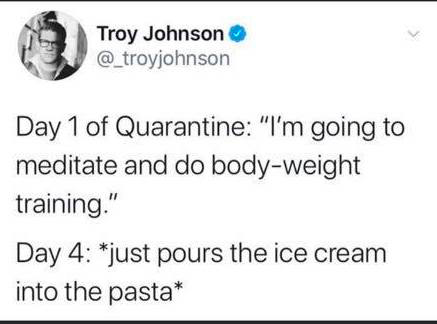
Everyone’s always so excited when you start something new:
Matthew McConaughey can really play any part, can’t he?
As memes have become more prevalent across our culture, this is how we choose to communicate not only amongst our peers but with the world through social media (and beyond).
So although it might seem on the surface as though the use of memes minimizes the importance of certain events, “A deeper look reveals that they play an integral part in some of the defining events of the 21st century,” explains Shifman.
What part, exactly? Simply put, memes can serve several purposes – shaming actions (our own and others’), relating, camaraderie, empathy, pointing out the obvious, etc. – and no matter their purpose, they all serve to bring about laughter.
Thrillist staff writer Wil Fulton created an acronym (MEME) to define the characteristics of memes:
Message: There needs to be a clearly definable, central message or reference that’s understood, and relatable by commonly shared knowledge or experience.
Evolution: The meme cannot remain static. It must be adopted and remixed by a community of people that embrace it.
Malleability: It must aid in its own evolution by having defined characteristics that can be changed while maintaining and preserving some semblance of the original message.
Effect: It has to reach a certain level of popularity and understanding, or the message won’t matter. Perhaps the most important part of the meme is its virality.
One part that I think is missing from both Shifman and Fulton’s definitions or criteria is the fact that a meme isn’t a meme if it isn’t shared. Though they both allude to it – Shifman’s “circulated” and Fulton’s “popularity” – shareability is one of the cornerstones of memehood.
The whole tree-falling-in-the-forest adage rings true right about here.
If a meme isn’t shared, is it even a meme?
This is an important characteristic because it will serve us later in answering the question of why memes seem to have become an acceptable way to deal with the COVID-19 pandemic crisis of 2020. (More on that later.)
Another cornerstone is the “it’s funny because it’s true” nature of memes. The reason memes are funny is because they’re based on actual facts. In comedy, the best jokes come from observational humor. In the online world, memes serve the same purpose.
Covid memes and the science of humor
“You cannot hope to understand the most serious things in life unless you understand the most humorous.” – Winston Churchill, former Prime Minister of the United Kingdom
…And there are few things in life more serious than facing a global pandemic.
Both Buxman, a registered nurse and neuro-humorist, and the Mayo Clinic agree that humor offers certain emotional and mental benefits, such as establishing relationships, relieving anxiety, releasing anger in a socially acceptable way, decreasing depression and loneliness and increasing self-esteem, as well as physical benefits like increasing pain tolerance, improving respiration and breathing and exercising facial, abdominal and chest muscles, leading to reduced muscle tension.
These days, the anxiety, fear and inherent loneliness from being isolated for weeks at a time can be jarring, to say the least. Humor, in that sense, is helping to unite us in a socially acceptable way.
It’s been shown that as a positive emotion, humor can undo the physical effects of negative emotions like anger or sadness, which corroborates the idea that one of the evolutionary purposes of positive emotions (notably humor) is to ease or reduce tension.
And since the start of COVID-19, we’ve seen a lot of this through shared memes like this…
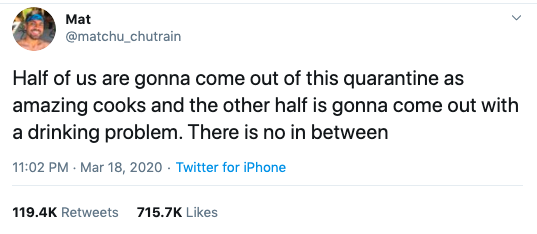
Based on the posts in the earlier half of quarantine, you were either preparing to join Top Chef or Celebrity Rehab with Dr. Drew:
In a longitudinal study conducted by Robert W. Levenson et al and published by the American Psychological Association, 157 middle-aged and older couples were studied beginning in 1989. The study reports,
“One of the powerful themes that emerged from this work was the association between successful emotion regulation during conflictive interaction and marital satisfaction and stability.”
That is, those who were readily able to regulate their emotions (through humor) were found not only to have a more satisfactory and stable marriage, but also stayed married longer (over 50 years) than those who didn’t or couldn’t regulate their own emotions. “These couples introduced positive emotions, such as affection and humor, to ‘soothe’ and ‘calm’ the interaction, thus reducing the level of negativity to a point where they could continue to work on the issues at hand.”
You can equate this to those of us who seem to laugh during particularly gruesome scenes in horror movies, or share funny stories during a funeral or wake, or when we laugh at someone who just fell (but didn’t seriously hurt themselves). The Levenson study suggests that these behaviors are meant to reduce our negative emotional states, specifically fear, anger and sadness.
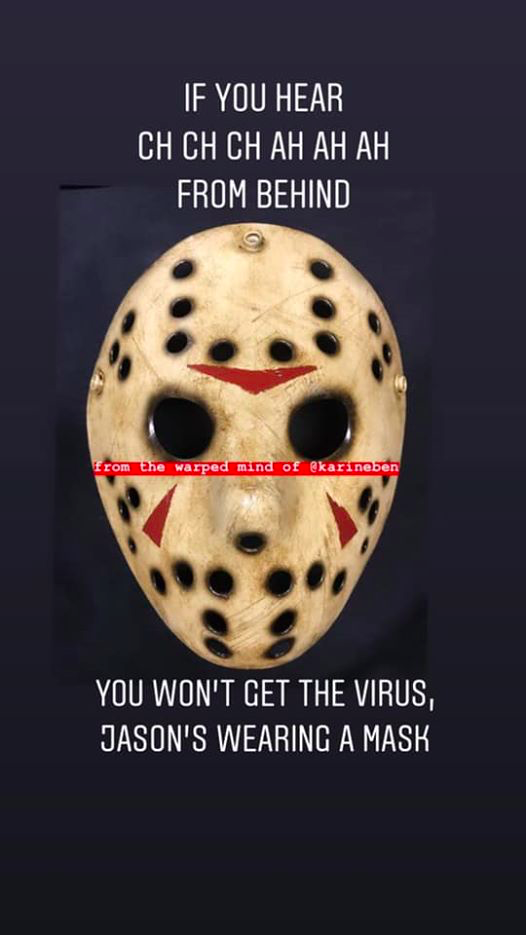
As luck (or serendipity, ahem) would have it, March brought with it one of the few Friday the 13th and it was an opportunity for pop culture and memes to make magic:
Who wouldn’t be afraid of someone in a Michael Myers costume at the grocery store?
A joke Stephen King fans would understand:
Samuel L. Jackson is one of my favorites… his expressions (and swearing) says it all:
Though sometimes it’s suggested that you “sweep [your feelings/thoughts] under the rug” to avoid negative emotions, Levenson et al suggest evoking a positive emotion is more beneficial than suppressing a negative one.
They concluded by suggesting that this strategy “[m]ay have the long-term advantage of reducing demands on the autonomic nervous system, allowing us to redirect our physical and cognitive resources toward other challenges in the environment.”
By creating and sharing things that make us laugh, we can reduce negativity or regulate our negative emotional states to adapt.
Humor (and laughter) are the much-needed medicine we all require during a pandemic.
The power of laughter during a pandemic
“If you lose the power to laugh, you lose the power to think.” – Clarence Darrow, American Civil Rights activist
Buxman explains that:
“Humor generates a cascade of neurotransmitters which engage your prefrontal cortex which processes wit, [engages] the limbic system which evokes mirth, [and engages] the occipital lobe which generates laughter.”
TL;DR laughter engages your whole brain. It’s like a full-body workout but for your brain… and laughter is your cardio.
Dr. Robert Provine, former professor of psychology at the University of Maryland, found that (not surprisingly) we laugh more (way more) when we’re with friends. He explains,
“Social laughter is 30x more frequent than solitary laughter. And the discovery here was it was the relationship between individuals that was causing the laughter not jokes.”
And Scott confirms that, indeed, laughter is an extremely behaviorally-contagious effect that you’re more likely to ‘catch’ from someone you know than from someone you don’t. Which explains why we always seem to laugh more (out loud) when we’re surrounded by others than when we’re alone. It’s like when you are at a live comedy show in a room full of people vs when you’re watching a comedy special on your couch. I know I’m way more boisterous in groups than alone.
Good news: there’s an actual physiological reason for this phenomenon. It involves mirror neurons.
Assistant professor of psychiatry at Harvard Medical School and the director of social neuroscience in the Psychotherapy Research Program at Massachusetts General Hospital, Carl Marci, MD, suggests that based on studies done to measure the effects of laughter during psychotherapy, “Mirror neurons, which are linked to empathic behavior, are often involved in laughter. Mirror neurons are a subset of neurons that fire both when we perform an action and when we observe that same action performed by others.”
And during his TEDxMünchen talk, award-winning filmmaker, novelist, and playwright, Anthony McCarten explains,
“The forces of seriousness would limit us to narrow thinking, rigid ideology, cruelty and tunnel vision. Whereas humor obliges us to have an open mind, it obliges empathy and forgiveness.”
McCarten’s quote hits me particularly close to home. Growing up, everything was turned into a joke in my family. And for better or for worse, it’s meant that as an adult, I also try to turn everything into a joke, or at least see the humor in everything. It gives me a different perspective than I find others might have because I don’t take myself (or others) too seriously.
If you’ve ever enjoyed a deep belly laugh, then you don’t need “experts” to explain that laughter is contagious, especially when you’re with people you know and trust.
But why? Why do we suddenly burst out into laughter just because we’re in the company of others? Why are we exponentially more likely to laugh when we’re with friends or family?
Scott provides the answer:
“Wherever you find [laughter], it’s associated with interactions… you’re laughing to show people you understand them, that you agree with them, that you’re part of the same group as them.”
McCarten goes a step further to suggest that we’ll laugh at almost anything to maintain our standing within a “community” because jokes (humor and laughing) connect us. Alison Beard, senior editor at Harvard Business Review, says,
“Good comedy is a conspiracy. Create an in-group.”
Meanwhile, philosopher Ted Cohen surmises that laughing at someone’s joke means you have the same worldview (of a given topic):
“humor serves the vital psychological and social function of confirming or cultivating intimacy, and establishing or reinforcing community.”
But way before in-jokes, before studies and research, before… even maybe speech, laughter signified to fellow humans that everything was okay, or that danger had passed.
The evolution of quarantine realization through the Kanye West lens:
So many stories about cruise ships being stranded for fear of sick passengers:
So how can laughter during the COVID-19 pandemic signify that the danger has passed? Especially since it has not (not yet, at least) passed?
Sharing (covid memes) is caring
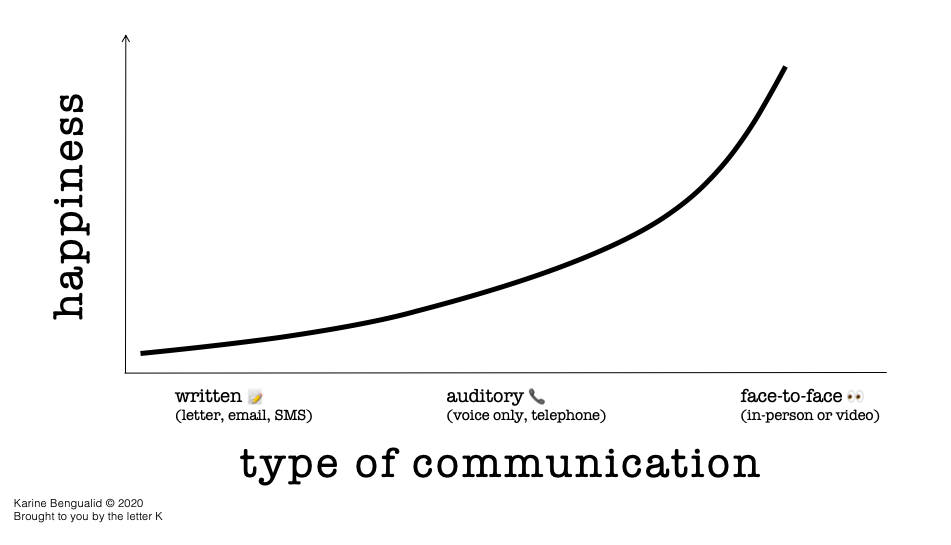
According to Scott, there’s an unspoken communication hierarchy that dictates how happy or satisfied we are with our social interactions.
It should come as no surprise that the highest level of satisfaction comes from face-to-face communication. This is due in most part to the fact that seeing each other allows us to read non-verbal cues that allow us to paint a more complete picture of the message(s) we’re receiving (or sharing). This not only occurs in-person but nowadays can include video calls when you can’t physically be together (hello Zoom and FaceTime!).
When that’s not an option, auditory communication is next in the preferred communication hierarchy, followed by written communication like letters, emails, even social media posts. It stands to reason that with less interaction (visual or auditory), we lose parts of the message, and therefore, our satisfaction with those interactions is lower.
Can the interaction represented by sharing memes, despite their lack of face-to-face communication, generate the same joy and satisfaction as cracking someone up in person?
I hypothesize that the act of sharing something on social media is the modern-day “stamp of approval.” It’s the equivalent of communicating to another that (1) you approve of this content, (2) you think it’s funny and (3) you believe they will agree that it’s funny.
Usually these three things are instantaneously communicated and understood when you’re physically in the same room as someone else sharing a story. However, when you can’t be in the same room together, sharing something on social media helps to solidify that intent.
The act of sharing memes is the sticky point here. And if someone else shares something that you’ve shared, then, as Scott explains:
“You feel like you’ve had a social interaction, even if you weren’t laughing out loud in person.”
The other, and arguably more important, power of memes lies in the fact that not everyone understands or gets the joke. And much like how McCarten suggests you have to belong to the “community” to be “in on it,” understanding a meme gives you that same sense of approval and acceptance. It makes you feel like you’re part of a certain community.
There is no better feeling than knowing that you understood a joke that not everyone will be privy to; not everyone will understand or appreciate. You’ve probably also been on the other side of the interaction, when you see people laughing or enjoying a meme or joke and you’re sitting there wondering, “What am I missing? I don’t get it.”
When you get it, it’s empowering.
Again, a Gen-X joke at its finest: Chuck Norris drinks Coronavirus for breakfast:
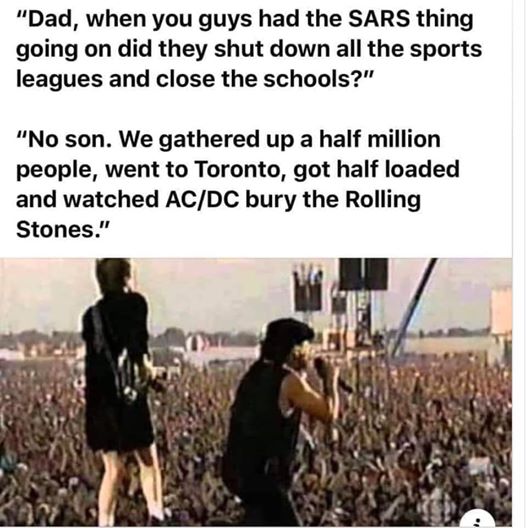
Do you remember the SARS outbreak? I sure do.
It looked very different than the COVID-19 outbreak:
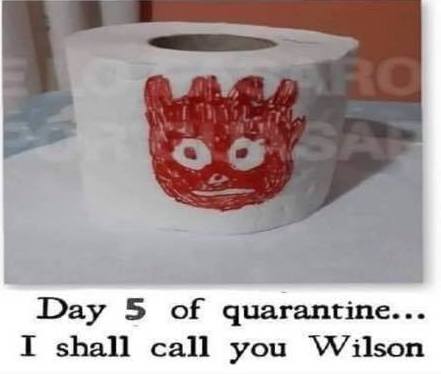
A riff on the movie Castaway with Tom Hanks:
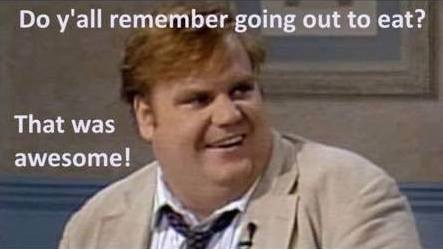
The Chris Farley Show from Saturday Night Live, where he awkwardly says “That was awesome” during his celebrity interviews:
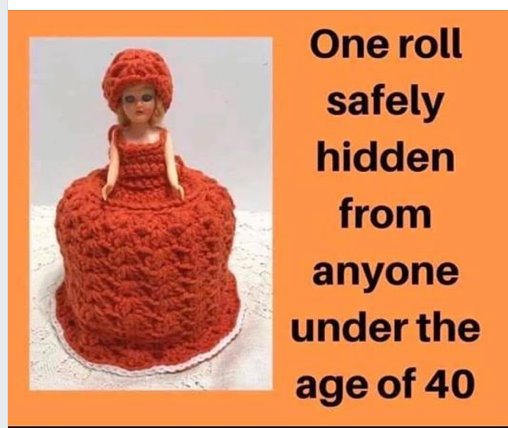
By now I’ve shown my age… the toilet paper cozy grandma had of that weird-looking Barbie-wannabe with matching knit hat and dress:
Meanwhile, most of the social media population logs on to share positive emotions, things that make you laugh or make you happy. Says Scott:
“We use laughter and humor quite overtly to try and reduce anxiety and stress by sharing laughter or sharing something we can laugh at.”
That’s the intent: to deal with or even de-escalate stress, because we know (now) that humor helps decrease depression and loneliness (check, check) but also makes us feel good (cheeeeeeeck!).
Those in particularly stressful jobs have been known to deal with their stress by way of more macabre or dark humor. Which leads us to…
Get your mind outta the gallows
Scott introduced me to the weird and wonderful world that is humor in high-stress jobs. She explains they serve three purposes: “1. Increasing social bonding. 2. Dealing with the stress of the job and coping. 3. Keeping outsiders out.”
What I found in my research is that most of these high-stress on-the-job jokes are quite dark and morbid. And although some translate to outsiders, as an “outsider,” I admit that you probably had to be there.
Gallows humor, as it is referred to, takes serious, painful, or even scary topics and trivializes them in an irreverent or satirical way. Professor Katie Watson, lawyer and bioethicist at Northwestern University and adjunct faculty member at The Second City in Chicago, says:
“Joking about death fits the term most literally, but making fun of life-threatening, disastrous or terrifying situations fits the category as well.”
In her book, Doctors in the Making, Dr. Suzanne Poirier, professor emerita of literature and medical education at the University of Illinois College of Medicine, explains,
“Anger and gallows humor are generally accepted forms of expression among undergraduate and graduate medical students… but expressions of serious self-doubt or grief are usually kept private or shared with only a trusted few.”
In these types of professions, serious self-doubt and grief can be construed as incompetence or being unable to hack it. Instead, gallows humor helps accomplish two things: first, release tension and stress, and second, save face with colleagues and superiors.
Even Sigmund Freud proposed that those who are “unafflicted” prefer when “victims” joke about their predicament because “it relieves us of the burden of sympathy.” As the joker, however, Freud further suggested it’s how we choose to avoid dealing with both internal (like our inhibitions) and external (things that are out of our control) conflicts, the latter of which is best dealt with laughter rather than anger.
And it’s also been documented that concentration camp prisoners would joke about their circumstances as a way to deal with the horrible injustices they faced.
The curious chihuahua gets me every time:
Pretty morbid but also true:
“A joke is a rebellion against oppressive authority, and few authorities are more oppressive than death, illness, and injury,” says Watson.
“Humor is what happens when we’re told the truth quicker and more directly than we’re used to. The comic is the truth stripped of the habitual, the cushioning, the easy consolation.”
Saunders calls this ‘rapid-truthing’. In the case of gallows humor, oftentimes, rapid-truthing is seen in the form of breaking down a situation (likely a grim or dire one) and calling out its absurdity. To the layperson, this may seem insensitive, but sometimes it’s necessary to get your point across faster and with impunity. And sometimes that rapid-truthing may end up looking like a joke.
Philogelos, or The Laughter Lover, is the oldest known collection of jokes that dates back to the fourth or fifth century. Some of the jokes were about oversexed women (ahem!), the absent-minded professor (the era’s equivalent to blonde jokes), and other themes that translate today with a few lingo swaps.
But others, jokes about crucifixion, don’t translate so well to the 21st century and, more so, make you wonder… WTF was wrong with these people?
From Philogelos, Joke #121 (as translated by Professor William Berg)
An Abderite observes a runner who’s been crucified. “By the gods,” he exclaims, “He’s no longer running – he’s flying!”
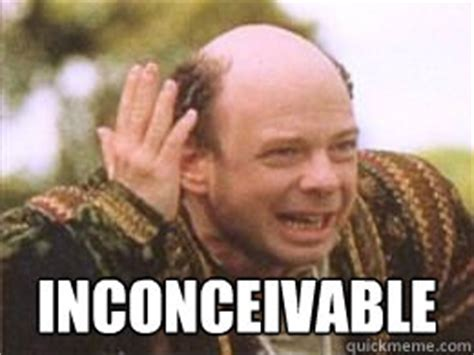
To us, this seems both insensitive and incomprehensible, even “inconceivable,” but the fact of the matter is that in those days, crucifixion was everywhere, in public places and in plain sight for everyone to see and fear. And as we’ve already discovered, humor is one of the best ways of dealing with fear and stress, except instead of this being a horror movie, it was their real life.
When you’re faced with death, torture, pain, suffering and other external conflicts (that are out of your control), the option for humor and laughter seems like the most rational. As Thomas Kuhlm said,
“[Humor] offers a way of being sane in an insane place.”
The COVID-19 pandemic and international lockdown seem like an insane place, making this topic the perfect opportunity for humor.
At the very core of memes is rapid-truthing at its best. With only an image and limited room for characters, there is no other choice than to get your point across as succinctly as possible. Memes have structure: the image (which has a predetermined meaning) plus the syntax help convey your point much faster. Voila: rapid-truthing.
The image you choose for your meme pretty much determines the underlying message you’re trying to convey:
Grumpy cat (you’re unhappy about something trivial)
Distracted boyfriend (shiny object syndrome)
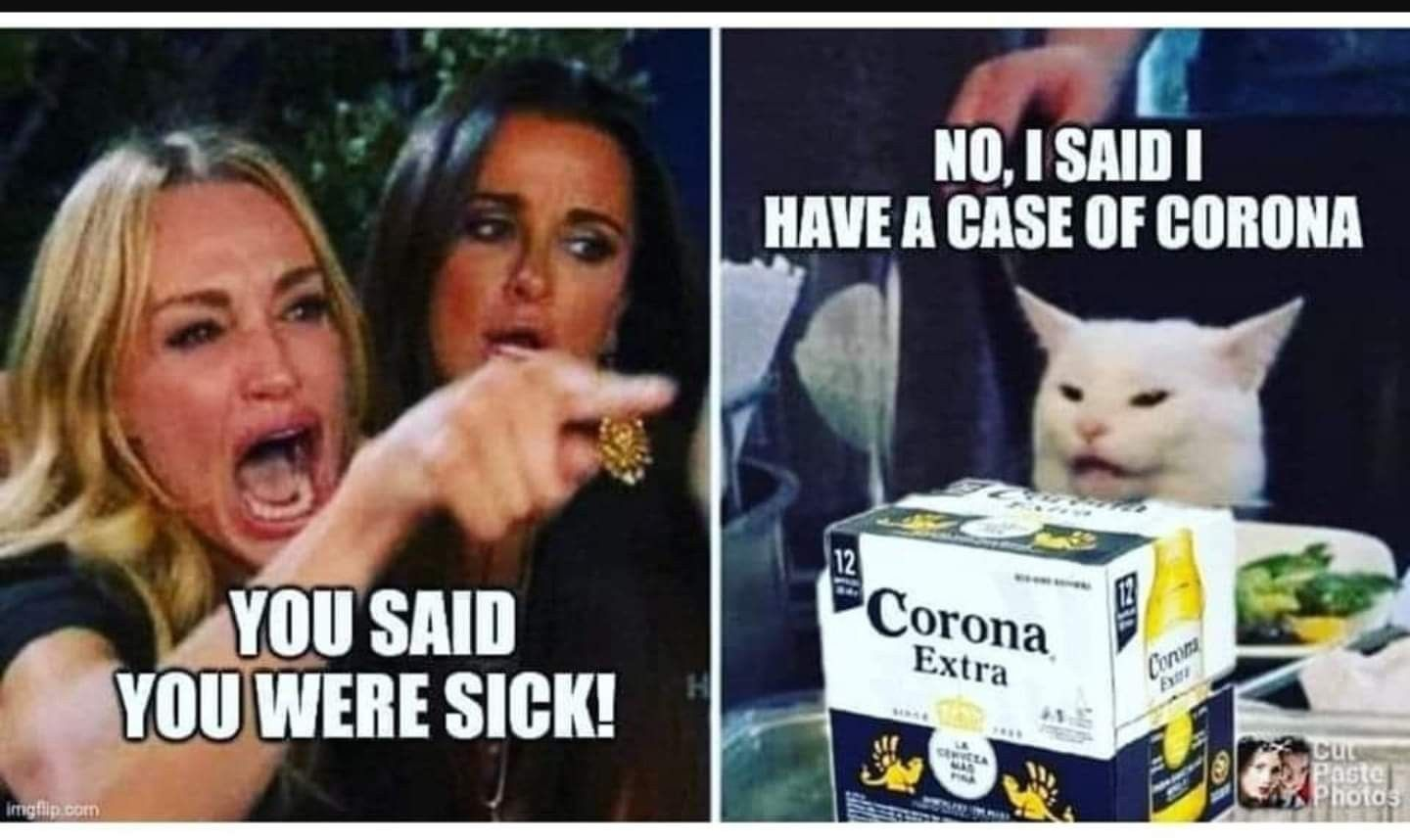
Woman yelling at cat (different opinions)
Success kid (celebrating small wins)
That would be great (asking to do something simple)
And many, many, many more.
In her paper, Watson explains,
“There’s a structural reason people might laugh at [the joke], and that’s a cognitive reaction to incongruity. Human brains trained in pattern recognition quickly spot pattern disruption and jump to the startle response of laughter.”
This also validates the notion of why memes are so popular and funny – they interrupt our expected patterns or schemas. Because memes are so commonplace nowadays, we know to expect the formula that comes with the different types, be it [ image + caption = funny ]. It’s the interruption of this pattern that brings about the humor in memes, and it’s why it always feels like new when you see a different version of an old meme.
To me, it’s clear: using laughter to cope with an ongoing pandemic during a worldwide quarantine is the way that many of us are choosing to deal with an absurd and incredible situation no one ever believed would happen in our lifetime.
This makes me laugh probably more than it should… because who in our lifetime thought you’d ever be able to say these words and mean them?
The use of memes as a conduit for humor is likely due to the medium’s ability to rapidly expose and acknowledge the truth, which allows us to confront the numerous ways in which our lives have been altered: working from home, kids at home, video calls, how to wash your hands, social distancing and quarantine, not the apocalypse you expected, new schedules, drinking, baking (sourdough), COVID-19 and coronavirus, toilet paper. There’s even a subgroup of memes wherein the words to common songs are being adapted to these events.
Such as:
Do Re Mi — COVID 19 version of The Sound of Music classic
Do I Have the COVID Virus? (Barenaked Ladies — If I had A Million Dollars)
The Singing Dentist’s CO-V-I-D (aka Ice Ice Baby by Vanilla Ice)
Hello (From the Inside) — Chris Mann’s parody of Adele’s song
“Being off-balance can make us laugh, and sometimes laughing is what keeps us from falling over.” Professor Katie Watson, Gallows Humor in Medicine.
The ability to laugh is the only thing keeping (most of us) sane during these particularly challenging times, especially since we don’t know how long it will take before life can go back to normal (or what the new normal looks like).
More than that, memes and humor are giving us the ability to bond as a community no matter where in the world we are because we’re all in this together (this is the first of two times I will ever say those words as it relates to the pandemic). Although we are all experiencing the pandemic slightly differently, we all share this commonality, and thus we are all in on the joke.
No, the deaths and the incredible suffering are not a laughing matter, but that’s not exactly what the memes are suggesting. We’re joking about the scary fact that the world has changed, likely, for the foreseeable future.
Cohen recognizes this: “When we laugh at a true absurdity, we simultaneously confess that we cannot make sense of it and that we accept it. Thus laughter is an expression of our humanity, our finite capacity, our ability to live with what we cannot understand or subdue. We can dwell within the incomprehensible without dying from fear or going mad.”
And is there anything more absurd than living through a pandemic in 2020? Memes have truly helped us all grow as a community, communicate our difficulties and show that we really are all in this together.
Take your daily dose of memes and call me in the morning.


 Clear, benefit-driven copy